

A family emergency plan sheet records contacts, meeting places, and responsibilities before an emergency occurs. A useful plan is specific to the household and is reviewed with everyone who may need it.
Choose a readable layout with space for local contacts, an out-of-area contact, meeting points, accessibility needs, and essential supplies. Keep a printed copy accessible.
Template previews and downloads
Check Family Emergency Plan Sheets

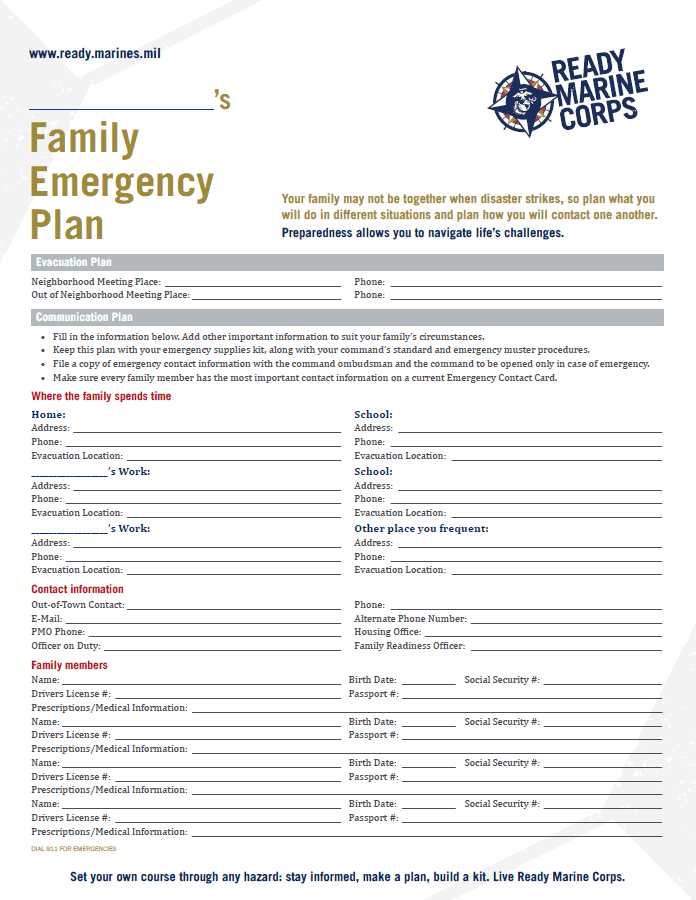

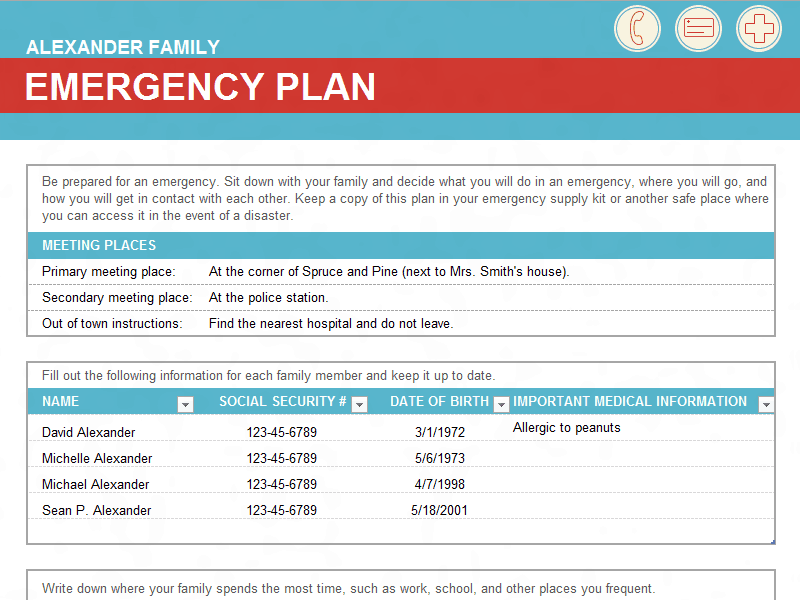
How to use the family emergency plan sheet
Step 1. Agree how household members will contact one another and where they can meet. Turn periodic preparedness checks into daily checklists.
Step 2. Record responsibilities for children, dependent adults, and animals, including a backup person. Reserve for emergency supplies in household budget templates.
Step 3. Practice the relevant arrangements and update changed contacts or household needs.
Make contact information usable when a phone is unavailable or a device battery is flat. A short printed contact list, agreed meeting points, and clear responsibilities can be easier to use under stress than a long document that nobody has reviewed. Keep addresses and contact names current.
Consider practical needs such as medicines, mobility assistance, communication barriers, and who can help when the usual caregiver is absent. Adapt arrangements to the household and local emergency guidance. Practice should identify unclear instructions so the plan can be improved before it is needed.
Example and checks
If one meeting place cannot be reached, the plan should name an alternative and explain how family members will communicate the change when possible.
A generic sheet cannot identify every local hazard. Follow official local emergency instructions and adapt the plan to the household’s actual needs. Reserve time for household reviews and practice using weekly schedules.
Make the plan specific to the household
A family emergency plan starts with the people who may need to act together. List the household members, regular caregivers, and anyone who may be responsible for children or dependent adults when the usual person is away. Think about ordinary circumstances as well as everyone being home at the same time. Family members may be at school, work, a place of worship, or traveling when an incident occurs. The sheet should help them understand the arrangements already agreed, rather than asking them to invent a complete response while they are under pressure.
Choose the information needed for the hazards and services relevant to your location. A template can organize contacts and responsibilities, but it does not determine whether a particular building, route, or meeting point is safe during every incident. Use instructions from local emergency authorities and the relevant school, workplace, or building management. Record the source of important local arrangements so they can be checked when the plan is reviewed. Keep the main sheet short enough to read quickly, with detailed documents referenced separately where necessary. A clear household plan is more useful than a long file nobody has discussed.
Prepare communication arrangements that are easy to follow
Record the contact names and numbers that household members are likely to need, including an agreed contact outside the immediate area where appropriate. Identify who should be informed and what basic information should be shared, such as who is safe, where they are, and what assistance is needed. Agree the order in which people will try to make contact when normal communication is disrupted. The plan should not depend on everyone remembering a number stored in one person’s phone. Give relevant family members an accessible copy suited to their age and needs.
Think about how the plan will be used if a device is lost, uncharged, or unavailable. Printed contact information can support the digital copy, but it should be kept where the relevant person can actually find it. Avoid including unnecessary sensitive information on a card carried outside the home. Children should know which trusted adults and existing school procedures to follow. Do not create instructions that conflict with official arrangements for collecting children or managing a building emergency. Review communication preferences with caregivers rather than assuming they know the household’s current arrangements.
Agree meeting points and responsibilities
Choose meeting arrangements in advance and discuss what each one is for. A nearby meeting point may serve a different situation from an alternative location farther away. Record the address or recognizable description and identify who may need help reaching it. A meeting place should be considered in the context of local hazards and official directions, not selected only because it is familiar. If the agreed place becomes inaccessible or authorities direct people elsewhere, the plan should allow the household to follow those instructions and communicate updated arrangements when possible.
Assign responsibilities in practical terms. Identify who normally assists a young child, checks on a dependent adult, carries essential documents, or manages an animal, and name a backup where useful. Responsibilities should reflect ability and availability. Do not assign a task to someone who is usually at another location when it would be needed. Keep the arrangements understandable enough that a backup caregiver can use them. The aim is to reduce uncertainty and duplicated effort, while recognizing that real conditions may require a different safe course under official guidance.
Include accessibility, health, and everyday support needs
Consider needs that may not be obvious from a standard contact list. Mobility assistance, communication support, essential medicines, medical equipment, and sensory needs can affect how a household prepares. Record the practical arrangements and who can help, while protecting sensitive health information from unnecessary circulation. A public or widely shared copy does not need every private detail. Where specialist support or equipment is involved, discuss appropriate arrangements with the relevant provider or professional rather than treating a generic planning sheet as technical guidance.
Keep support information current. A changed medicine, new caregiver, different school pickup arrangement, or updated equipment requirement may make an old plan unsuitable. Record where necessary items and supporting documents are kept, but avoid creating a single vulnerable collection containing every password or identity document. If a family member needs a simplified, translated, large-print, or visual version, prepare one they can use. Ask the person what helps them understand and act, rather than assuming the main household sheet suits everyone. A plan should work for the people included in it.
Organize essential information and supporting records
The main sheet can point to important records without reproducing all of them. Examples include insurance contacts, relevant service providers, caregiver arrangements, and the location of necessary documents. Use clearly labeled references so another responsible adult can find what is needed. Keep the contact details of the organizations relevant to your location and verify them through trusted sources. Do not copy emergency numbers from a foreign example template without checking that they apply locally. The fact that a number is printed in a professional-looking form does not establish that it is correct for your household.
Decide who receives which version of the plan. Household members, a trusted caregiver, and a designated contact may need different levels of detail. A version shared with a wider group should contain only information relevant to that audience. Label each version with a review date and identify the person responsible for updates. If a phone number changes, update the copies that people actually carry or keep at work and school. Editing the master file alone does not help if everyone continues using an older printed page with outdated information.
Practice the arrangements and learn from the review
Review the plan in a calm setting and ask household members to explain the important arrangements in their own words. This can reveal unclear addresses, unfamiliar contact names, and responsibilities that nobody has accepted. Practice appropriate household preparedness activities in line with relevant official guidance and the needs of those involved. The purpose is to discover what is confusing and improve the plan, not to frighten children or create unrealistic tests. Keep the conversation practical and make space for questions about what happens when a usual caregiver is absent.
After a review, record any changes and replace outdated copies. Set another review point that fits the household, and check the plan when circumstances change rather than relying only on a calendar reminder. A useful final check asks whether contacts are current, meeting arrangements are understood, responsibilities have backups, and relevant support needs are covered. The downloadable family emergency plan sheets provide a place to organize these decisions. Their value comes from the household discussion, appropriate local guidance, accessible copies, and continued attention to changes in everyday life.
Use a household review scenario to find gaps
A simple discussion can reveal whether the sheet works outside the situation everyone pictured when writing it. For example, consider a weekday when one adult is at work, a child is at school, and another family member is with a caregiver. Ask who already has the relevant contact information and which existing school or workplace instructions apply. The exercise should identify missing arrangements without asking anyone to improvise unsafe actions.
Then consider a communication problem. If the usual phone cannot be used, can the people involved find the agreed contact details from another accessible copy? Is the designated contact expecting that role, and are the details current? If the answer is unclear, update the sheet and discuss the change with the affected person.
Review a support need as well. A backup caregiver may need to know where essential information is kept and who can provide assistance. Keep the necessary details available to that person while maintaining appropriate privacy. An instruction that depends entirely on the absent adult’s memory is a gap the plan can address.
Finish by recording only the changes that make the arrangements clearer and more practical. Replace old copies and confirm that people understand their roles. The purpose is a usable household agreement supported by official local guidance, rather than a checklist that appears complete simply because every box has been filled.
Frequently asked questions
Where should copies be kept?
Keep accessible copies in agreed locations and give relevant caregivers the information they need.
How often should the plan be reviewed?
Review it after contact, household, health, or location changes and during regular preparedness checks.

