

A gift list template tracks recipients, occasions, ideas, budgets, and purchase progress. It helps prevent duplicate purchases and keeps spending visible before an event.
Choose a layout with one row per recipient or gift. Include purchased, wrapped, and delivered status only if those stages are useful to your routine.
Template previews and downloads
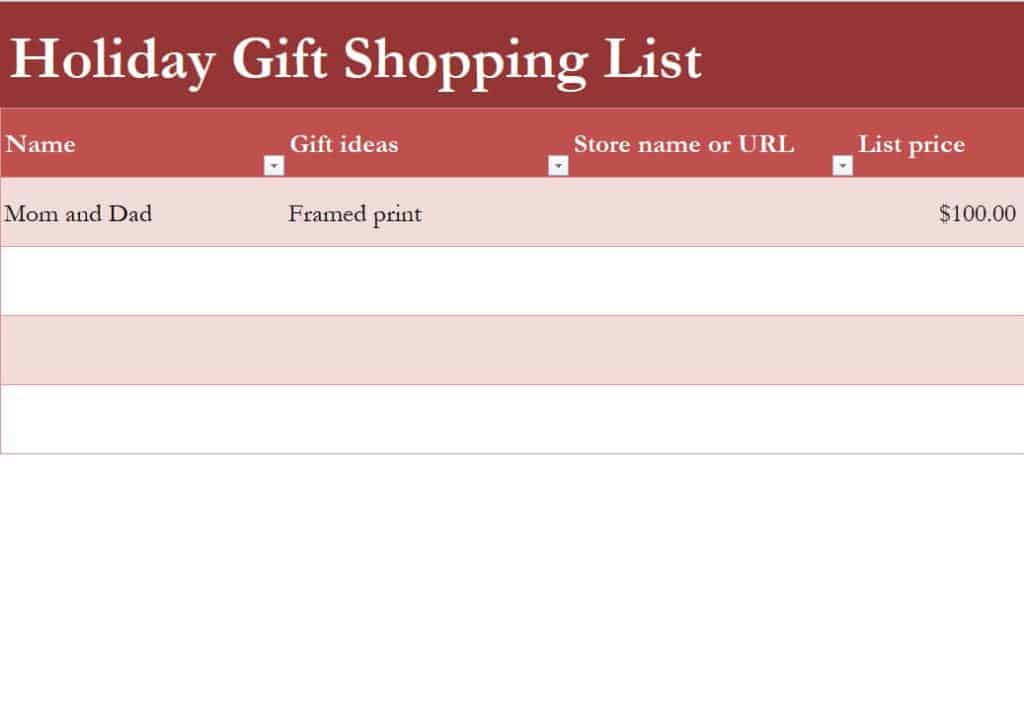
Holiday Gift Shopping List Template

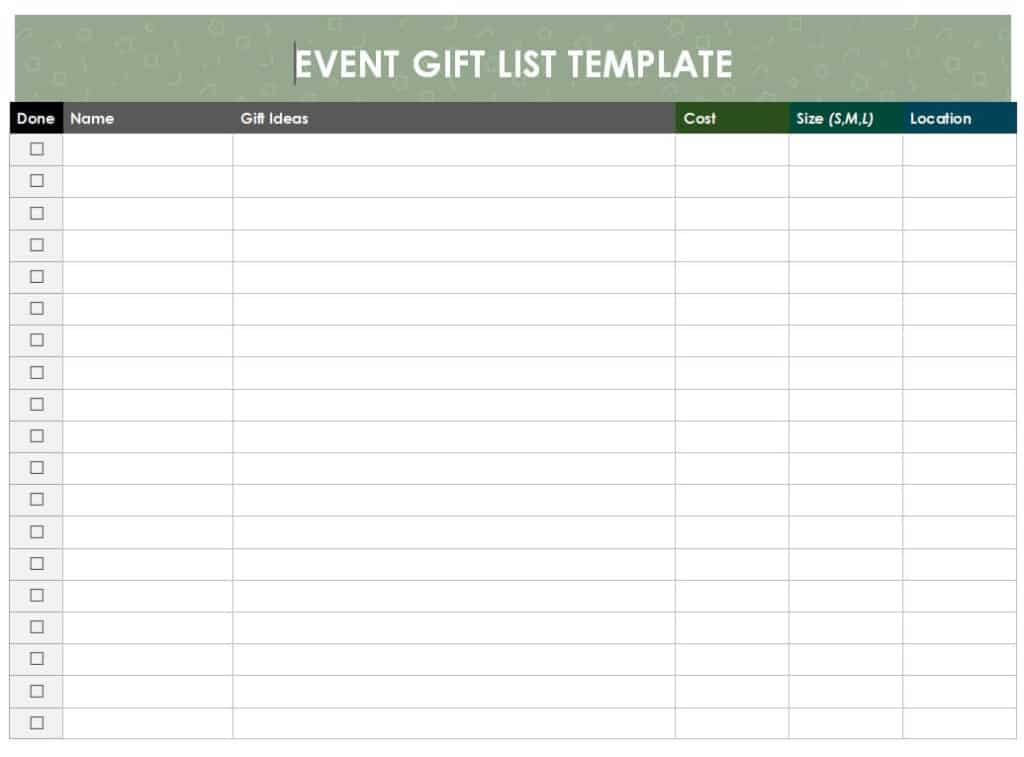
Event Gift List Template WORD

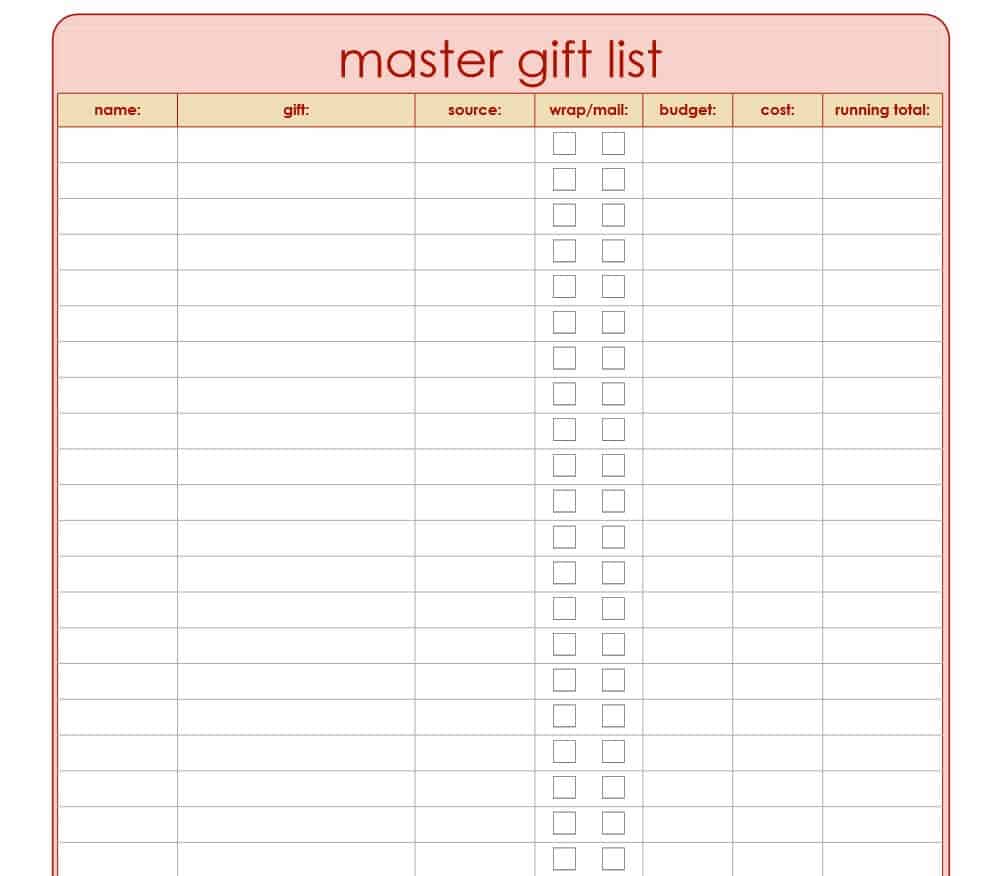
Practical Master Gift List Template

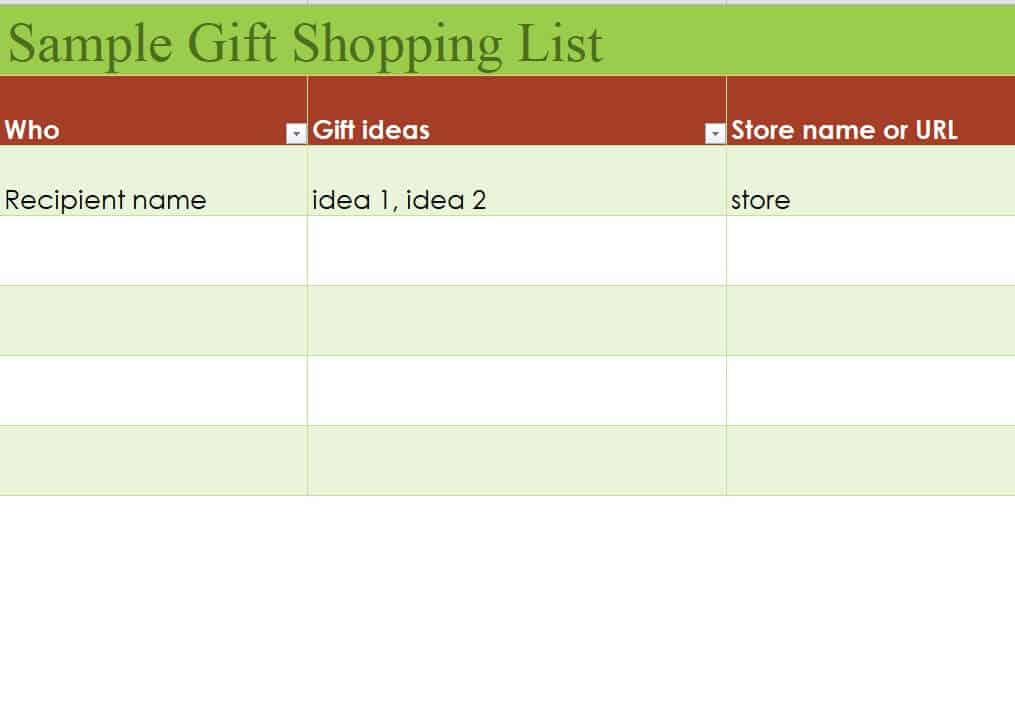
Sample Gift Shopping List Template EXCEL

Christmas Gift Shopping List Template in DOC Format

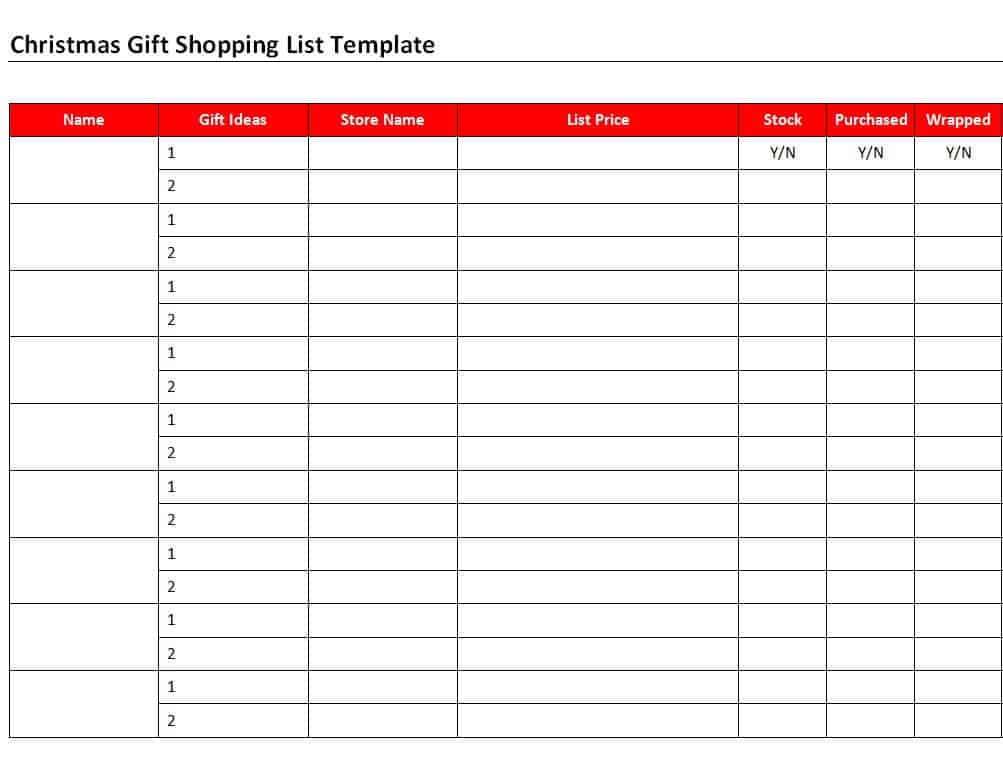
Blank Holiday Gift List PDF Template

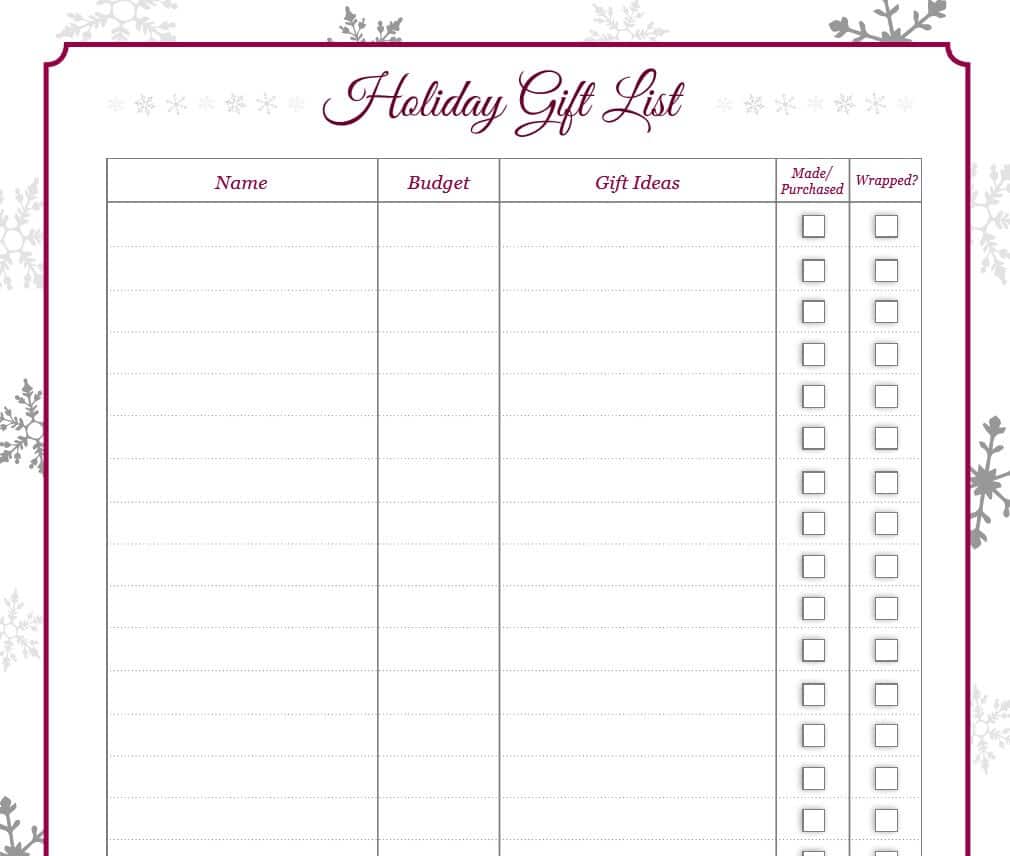
Basic Editable Gift List Template

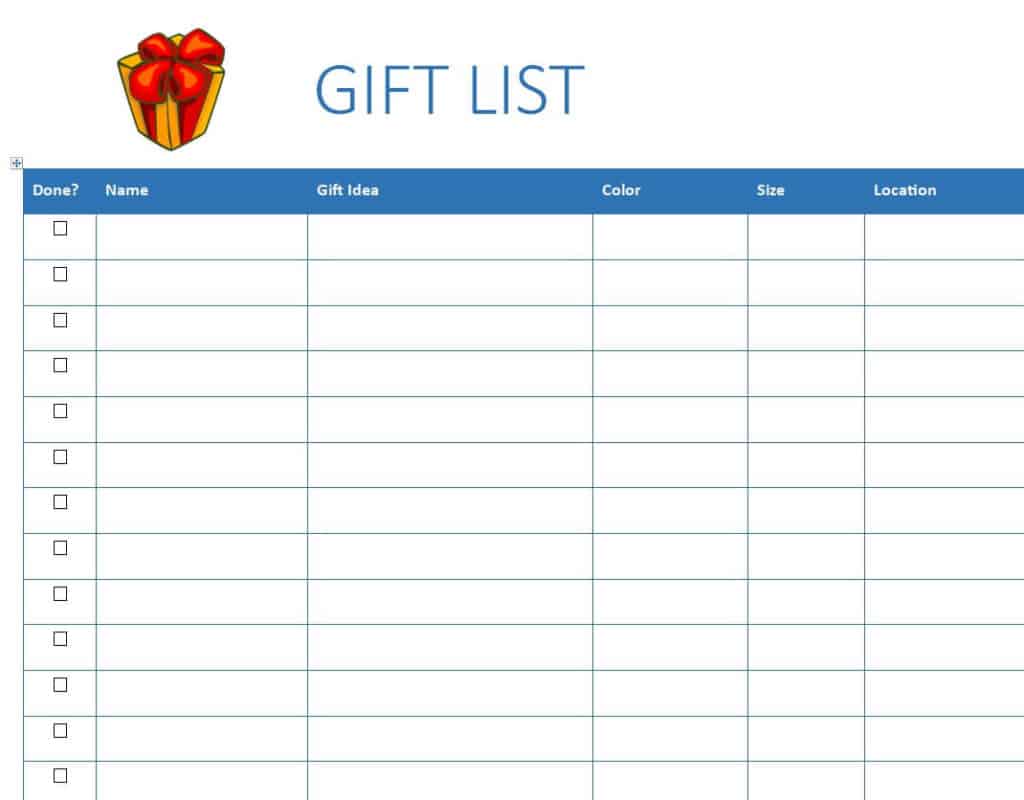
New Year’s Gift List Excel Template

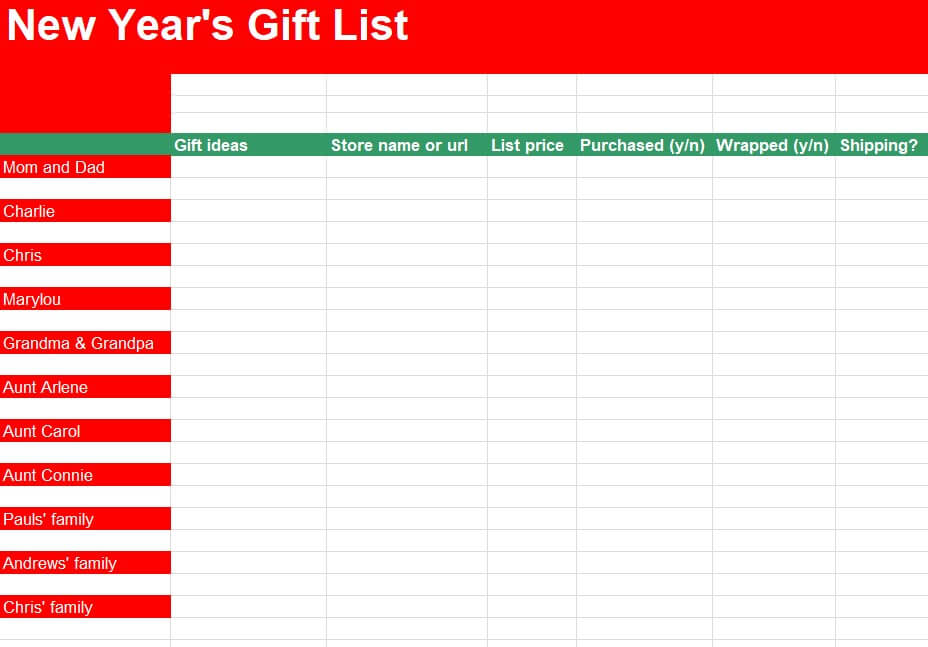
Simple Gift List WORD Template

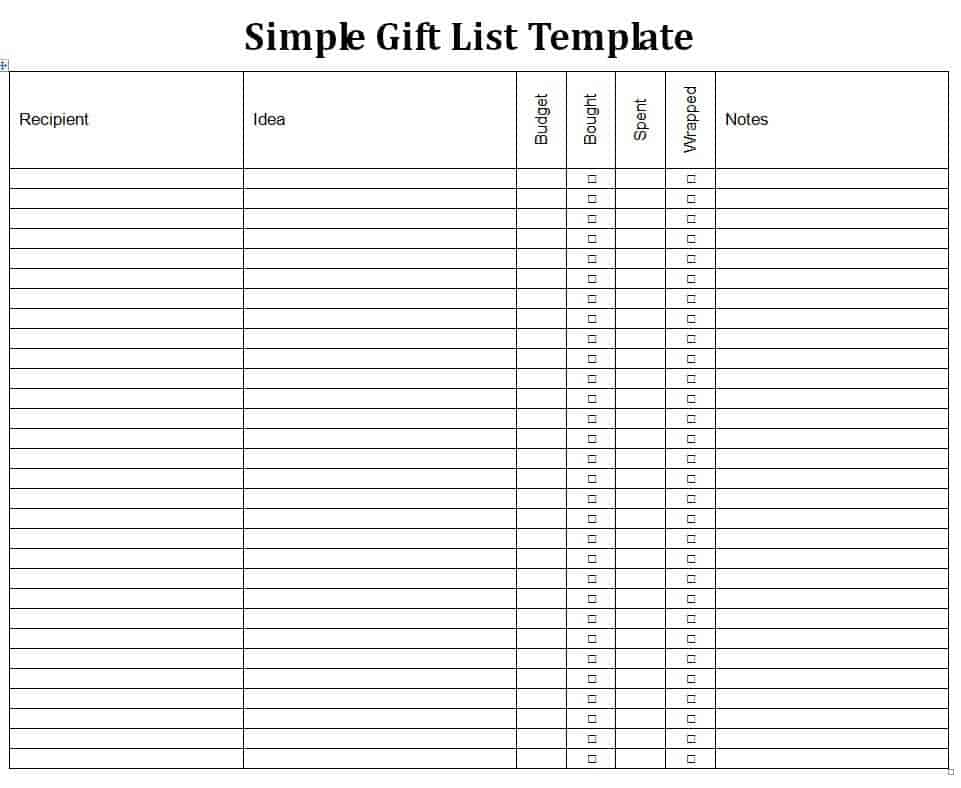
Special Holiday Gift List Template

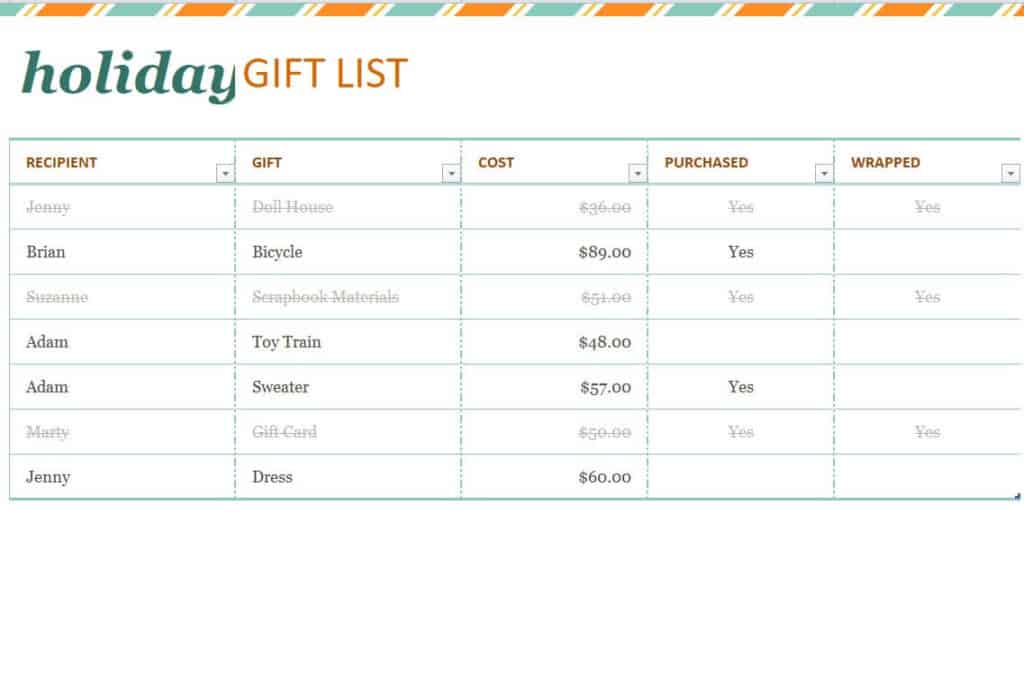
Free Printable Gift List Template PDF

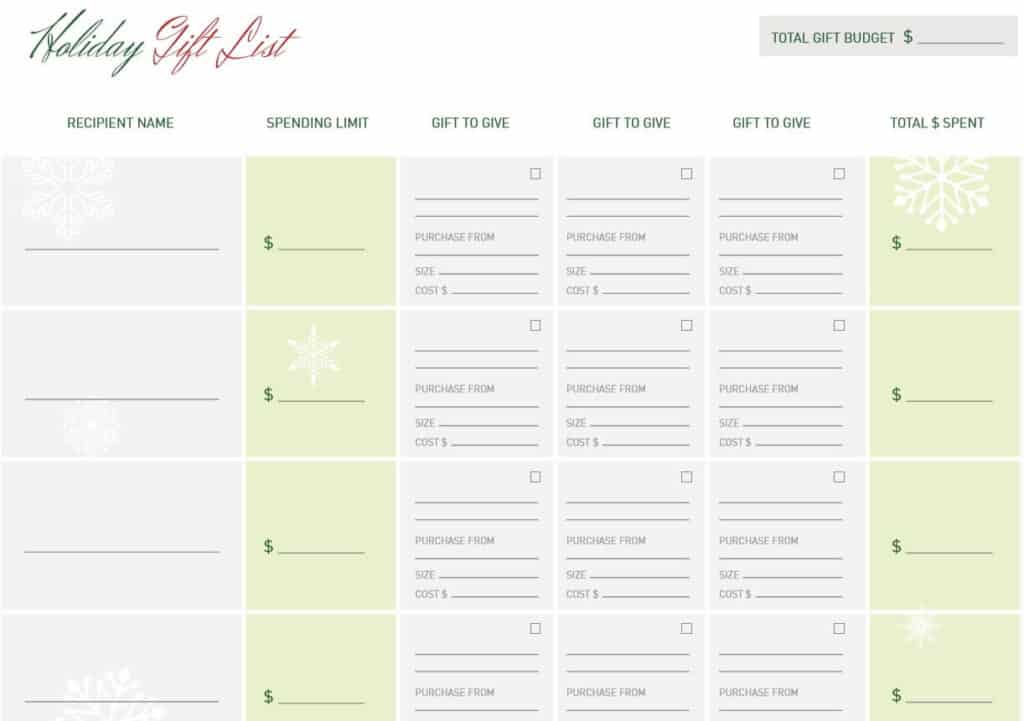
Example Gift List Template

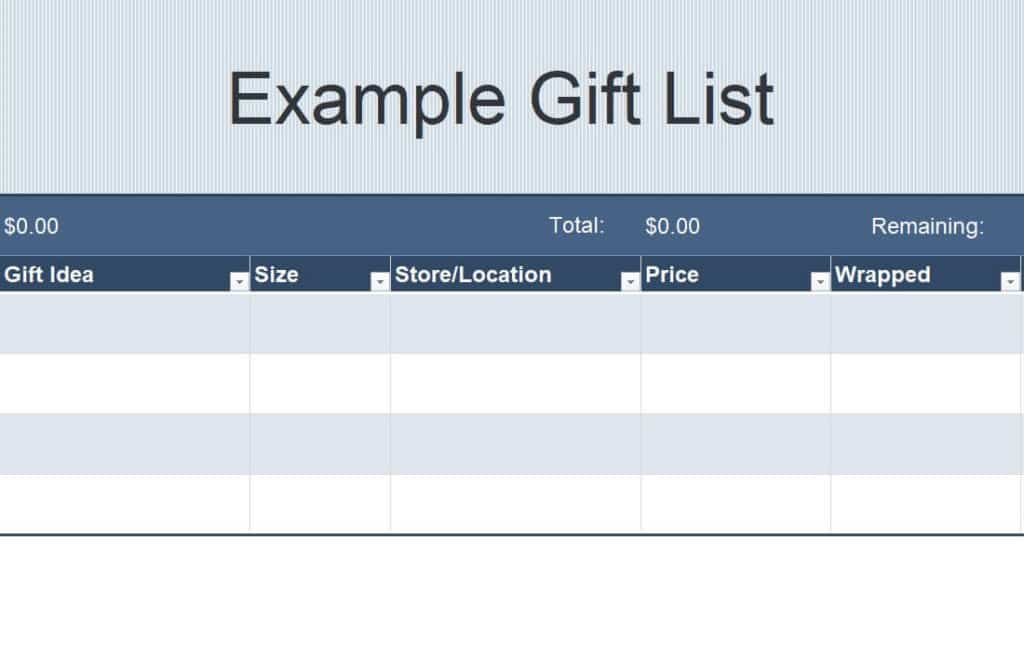
How to use the gift list template
Step 1. List recipients and occasions with target dates. Check immediate spending with daily budget templates.
Step 2. Set an amount for each gift and record ideas before buying. Reserve gift costs in household budget spreadsheets.
Step 3. Update actual cost and delivery status as purchases are completed.
Use a separate row when one recipient will receive several gifts, or keep a clear subtotal for that person. Record delivery charges and whether an item has already been ordered. A gift idea is not the same as a confirmed purchase, so the status should distinguish them.
For recurring occasions, keep a record of past gifts where that helps avoid repetition. Review preferences rather than copying last year’s choices automatically. If several people are coordinating purchases, agree who updates the master list and how surprises remain private.
Example and checks
A budget of 30 for each of five recipients totals 150. If one gift costs 45, review the remaining allowance rather than ignoring the difference.
Record shipping and wrapping costs if they count toward the overall gift budget. Keep surprise gift details out of shared household views. Track shopping and delivery tasks in to-do lists.
Choose whether the list tracks ideas or confirmed gifts
A gift list can collect possible ideas, record purchases, or track the full process from planning to delivery. Decide which role the template serves before filling it. An idea is not the same as an order, and an order is not the same as a gift received by the intended person. Clear status fields prevent the list from giving a false sense that everything is complete. Use a simple structure that matches the occasion and the number of people involved.
Identify the relevant event or period and the people responsible for maintaining the list. A personal list may be straightforward, while a family or team coordinating gifts needs an agreed master. If several people buy independently from different copies, duplicates can occur even when each person believes the record is current. Keep the current version recognizable and decide who updates it after a decision, purchase, or change.
Organize recipients and occasions clearly
Use names or identifiers that distinguish recipients and record the relevant occasion or date. If several gifts are planned for one person, choose whether each gift gets its own row or whether the recipient has a grouped section. The structure should allow costs and statuses to be understood without ambiguity. Avoid merging unrelated occasions into one total if they need different deadlines or budgets. A birthday gift and a shared event contribution may require different planning.
Keep notes appropriate to the purpose and audience. Preferences, sizes, or delivery information may be useful, but a broadly shared list should not expose unnecessary personal details. Some information can be held privately by the person arranging the purchase. A list for coordinating a surprise also needs sensible access choices. The template can organize the work without making every idea and personal note visible to every participant.
Set a budget that includes relevant extra costs
Decide whether the budget applies per gift, per recipient, or to the whole occasion. Label the basis so totals can be interpreted. Include delivery, wrapping, customization, or other charges when they are part of the spending limit. A gift with a low advertised price may cost more once those items are included. Keep planned and actual amounts separate so a purchase can be checked against the original allocation rather than silently replacing it.
Use one reporting currency for the summary and retain original amounts where a different currency is involved. Mark estimates and confirmed prices distinctly. If several people share the cost, identify the agreed contribution and the amount actually paid. A reimbursement between contributors should not create a second gift expense in the combined total. The list should help coordinate spending without turning a simple occasion into an unnecessarily complicated accounting exercise.
Move items through understandable statuses
Choose a short status sequence that reflects the process. Possible stages include idea, selected, ordered, received, wrapped, and delivered. Not every occasion needs all of them. The important point is that the chosen labels mean the same thing to everyone using the list. An item marked purchased may still need collection or delivery. A clearly defined next step prevents the record from appearing complete while practical work remains.
Record the date or reference needed to follow up an order where useful. Keep private payment details outside the shared list. If an order is canceled or returned, update its status and cost treatment so it does not continue to appear as a gift ready for the recipient. Retain a short explanation when it helps the group understand a change. A status field should describe the real current position, not the most convenient way to make the sheet look finished.
Coordinate shared purchases without duplication
Agree how a gift idea becomes reserved or assigned. A person choosing to buy an item should update the current record before someone else orders it. Identify the purchaser and any outstanding action, such as confirming a size or delivery address. For a joint gift, record the agreed arrangement clearly enough that each contributor understands whether they are buying an item, contributing money, or arranging the final presentation.
Review the list before making another purchase for the same recipient. Check whether an earlier idea was already selected or whether the gift has changed. Similar product names can conceal a duplicate, so use a short description that identifies what is actually being purchased. If the list is kept on paper, define a simple way for the group to communicate updates. The process matters more than whether the template has a particular color scheme or a large number of columns.
Plan delivery and the final preparation
A gift deadline is not always the purchase date. Allow for delivery, collection, personalization, wrapping, and the event itself. Use confirmed supplier information where timing matters rather than assuming every item can be obtained immediately. Mark an uncertain arrival clearly and decide whether an alternative is needed. The list can show the risk without pretending that a forecast delivery date is guaranteed.
Check the final recipient and destination before sending. A shared list may contain similar names or several addresses, so do not rely only on a copied earlier row. Keep unnecessary address details out of wider views when they are not needed. If a gift is handed over through another person, record the relevant status so the group knows what has happened. A simple delivery confirmation can prevent a purchased item from being forgotten in storage after the occasion has passed.
Review the occasion and prepare the next list
After the event, check remaining deliveries, returns, and shared-cost settlements. Keep any history that is genuinely useful for future choices, such as avoiding the same gift repeatedly. Do not retain private details indefinitely without a purpose. A clean future template should not accidentally contain old addresses, amounts, or incomplete statuses. Separate the reusable layout from the completed personal record.
Review which fields helped and which made entry harder. A small list may need only recipient, idea, budget, purchaser, and status. A larger coordinated occasion may need more detail. Use the simplest layout that keeps decisions and responsibilities clear. A dependable gift list brings together thoughtful ideas, realistic spending, clear purchase ownership, and timely delivery. It is useful because the people involved can understand the current position and take the next action, not because every available row has been filled.
A practical example of a shared gift plan
Suppose several relatives are coordinating gifts for one occasion. The shared list records each recipient, the selected idea, the purchaser, the budget basis, and current status. Before ordering, the purchaser marks the item as assigned so another person does not buy the same gift from an older suggestion.
One item needs personalization and another requires delivery to a different address. The list identifies those actions and their deadlines without exposing unnecessary private information to every contributor. The group can see what remains to be done rather than assuming that a payment means the gift is ready.
If an order is canceled, the status and related amount are updated. A replacement is not counted as an additional final gift unless that is actually the decision. Any refund or shared contribution can be tracked separately from the item status so the list does not confuse logistics with money movements.
Before the occasion, the group checks delivery and presentation responsibilities. Afterward, remaining settlements or returns are resolved. The completed record may help avoid repeating a gift next year, but the reusable template should be kept separate from private completed details.
The example shows why a modest number of well-defined fields can be sufficient. Clear ownership and timely updates prevent many coordination problems without needing a complicated system or a large collection of personal notes.
For a joint gift, identify whether the listed budget is the full item cost or one person’s contribution. Those amounts should not be added as though they were separate gifts. Clear labels let the group reconcile the purchase and contributions without losing track of the single item being arranged.
Frequently asked questions
Can I track gifts I receive?
Yes. Use a separate section for sender, gift, and thank-you status.
How do I avoid duplicate gifts?
Use one current list and mark the purchase immediately.

