
A debt snowball spreadsheet organizes repayment from the smallest balance to the largest. Keep making required minimum payments on other debts while directing the extra amount available toward the smallest debt.
Choose a layout that separates balance, interest rate, minimum payment, and extra payment. The snowball method orders debts by balance; prioritizing the highest interest rate is a different approach, often called the avalanche method.
Template previews and downloads
Debt Snowball Excel Sheet
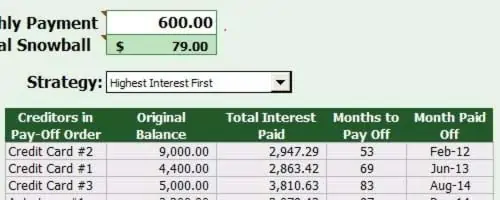

Debt Snowball Worksheet

Debt Snowball Worksheet Free

Debt Snowball Example
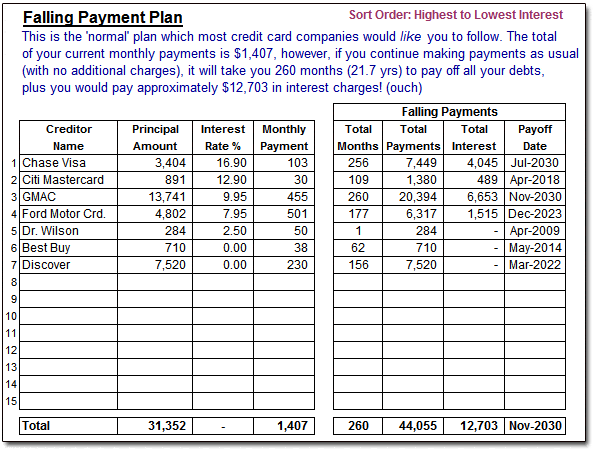
Debt Snowball Falling Payment Plan
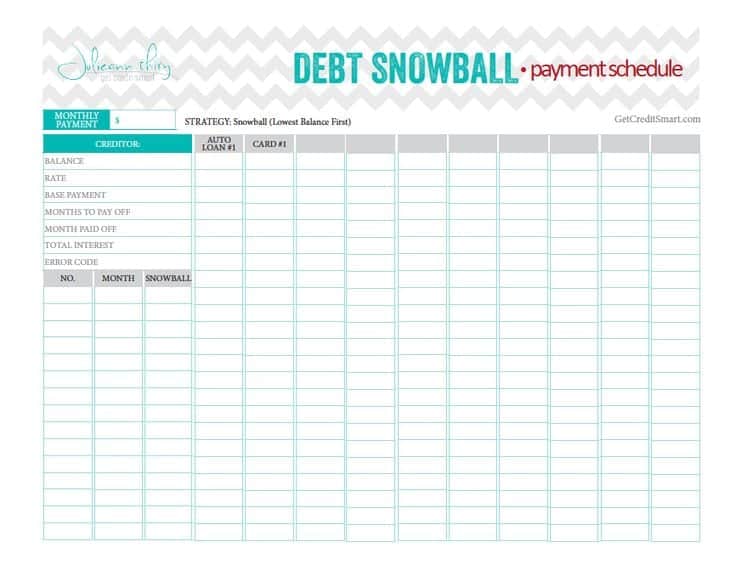
Debt Payment Sheet

Debt Snowball Calculator

Debt Snowball Printable

How to use the debt snowball spreadsheet
Step 1. List every debt with its current balance, interest rate, minimum payment, and due date. Compare repayment scenarios using debt calculator templates.
Step 2. Sort balances from smallest to largest. Set an affordable total repayment budget and allocate extra money to the first debt. Use budget worksheets to identify an affordable extra payment.
Step 3. After that debt is cleared, roll its former payment into the next debt and update balances using actual statements.
Give the spreadsheet a separate column for the payment you intend to make and the payment actually posted by the lender. Processing delays, interest, and fees can otherwise make the projected balance drift away from the real account. Keep account references abbreviated if the workbook may be shared.
Before increasing an extra payment, check that essential bills and required payments still fit within your budget. If the intended payment is unaffordable, revise the plan using current figures. The spreadsheet should make tradeoffs visible, rather than assume the same extra amount will always be available.
Example and checks
Suppose the smallest debt requires 30 per month and you can add 70. You direct 100 to that debt while maintaining minimums elsewhere. Once it is cleared, its payment can move to the next debt, subject to your budget.
A projection can change with interest, fees, new purchases, and variable rates. Reconcile the sheet with lender statements; do not treat an estimated payoff date as a guarantee. Track changes in total assets and liabilities with net worth statement templates.
For the relevant U.S. requirements or method, consult the CFPB explanation of repayment methods.
Frequently asked questions
Is snowball the same as highest-interest-first?
No. Snowball targets the smallest balance. Highest-interest-first targets the most expensive interest rate.
Should I stop paying the other debts?
No. Continue required payments on all debts while applying extra money to the chosen target.

You must be logged in to post a comment.