
A holiday planner template organizes travel dates, bookings, activities, and preparation tasks. It gives a clear reference for the trip while leaving room for changes.
Choose an itinerary layout for day-by-day travel or a preparation checklist for tasks before departure. Keep essential booking references accessible without exposing sensitive documents.
Template previews and downloads
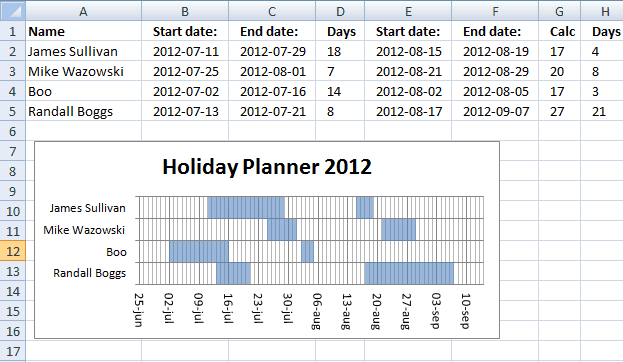
Employee Holiday Planner

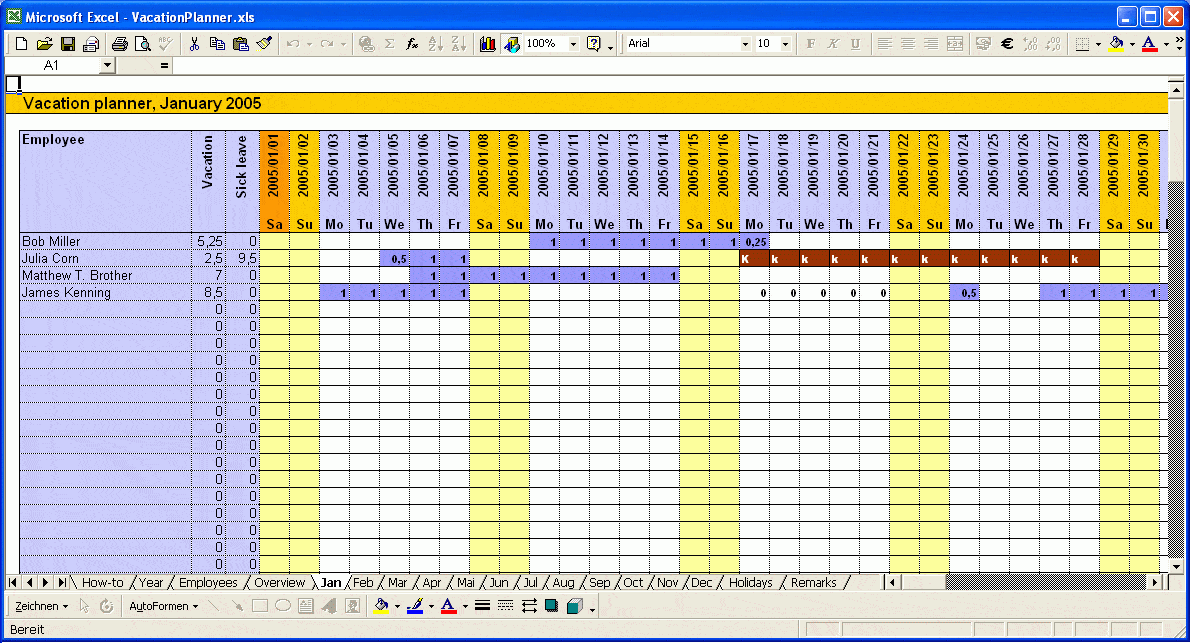
Vacation Planner Sheet
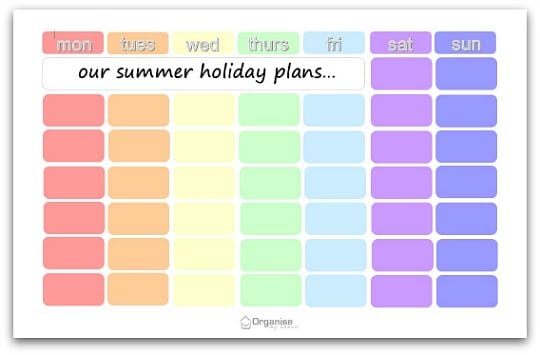
School Holiday Planner

Summar Holiday Planner Example
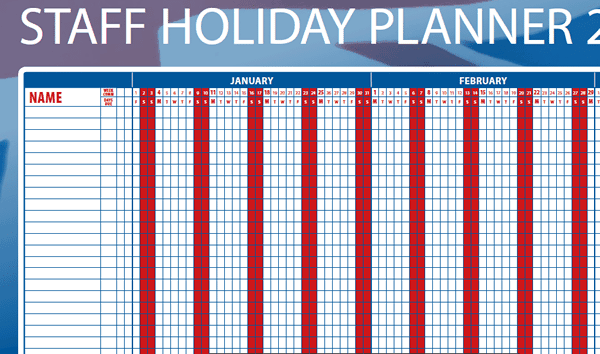
Holiday Planner For Staff
Blank Excel Holiday Planner

Holiday Planner For School
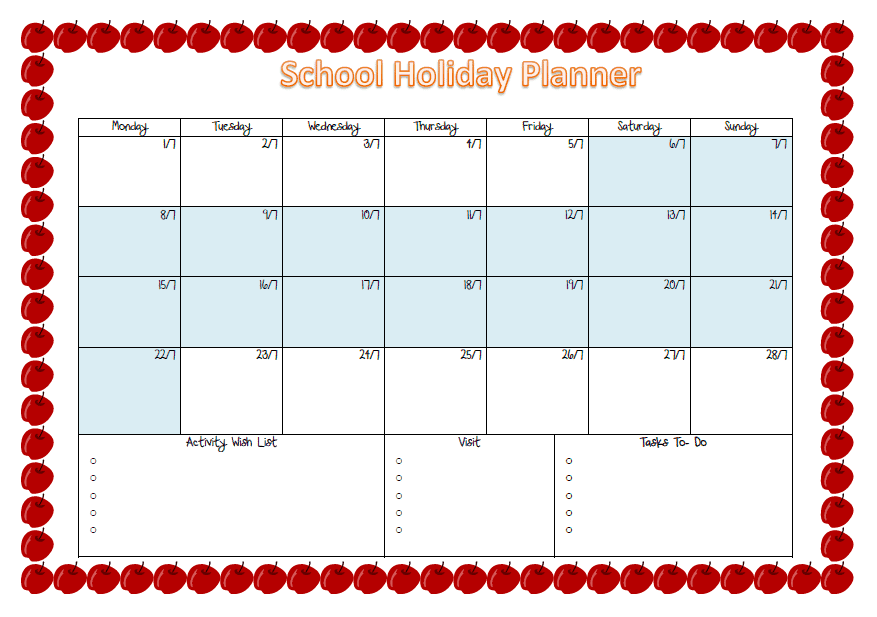

Printable School Holiday Planner
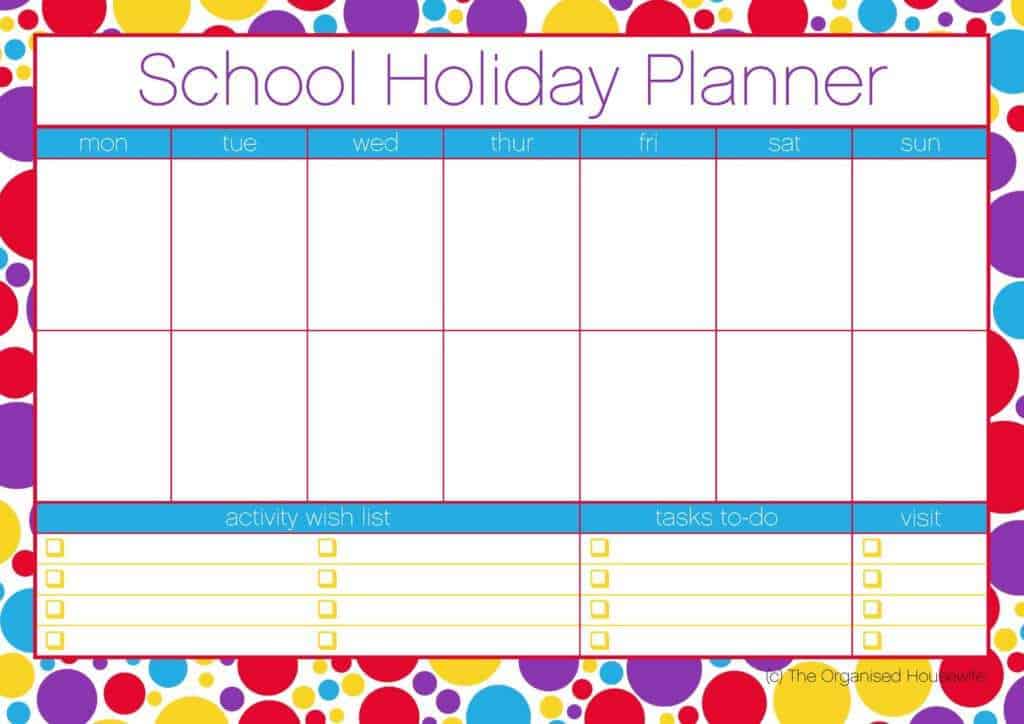
How to use the holiday planner template
Step 1. Enter confirmed transport and accommodation first. Plan day-to-day travel spending with daily budget templates.
Step 2. Add realistic transfer times, activity bookings, and open time. Track preparation tasks in to-do lists.
Step 3. Review booking conditions and share the relevant itinerary with travelers.
Keep confirmation references and key contact information where travelers can find them, but avoid putting passport images or payment credentials into a widely shared itinerary. A useful shared version can contain essential logistics while sensitive documents are stored separately.
Plan transitions as well as activities. Check-in, transfers, luggage handling, meals, and rest can take time that is easy to miss when entering only attractions. Keep an alternative for important connections where practical and record who is responsible for reviewing changed bookings.
Example and checks
A flight arriving at 14:00 does not support a 14:15 city-center booking. Allow time for arrival procedures, luggage, and transport.
A planner does not verify entry requirements or travel conditions. Check relevant official sources close to departure. Arrange work absence using time off request forms.
Choose the planning scope before entering bookings
A holiday planner can cover preparation, travel arrangements, daily activities, or the whole trip. Decide which role the selected template will serve. A day-by-day itinerary is useful for travel and accommodation, while a preparation list helps track tasks before departure. Trying to place every document, task, and private detail into one small grid can make it difficult to read. Use a clear main itinerary and keep supporting information in an appropriate separate record where needed.
Identify the travelers, destinations, and date range. A multi-stop trip needs enough structure to distinguish travel days from days spent at one location. Keep the plan flexible where arrangements are not confirmed. Mark a tentative activity as tentative rather than giving it the appearance of a paid booking. This makes it easier to see what still needs a decision and prevents someone from relying on a plan that was intended only as an early idea.
Enter confirmed transport and accommodation first
Use confirmation records to enter dates, departure and arrival points, accommodation details, and relevant booking references. Check names and locations carefully, particularly where a city has several airports, stations, or similarly named properties. Record local times and identify the date when an overnight journey crosses into the next day. A travel plan that omits a date change can create confusion about the first hotel night or the time available for a connection.
Keep confirmation details current when a provider changes the arrangement. Editing the itinerary does not itself amend the booking, and an old confirmation may not show a later change. Check the provider’s current information through the appropriate channel. The planner can record the status and reference without containing payment-card details or identity-document images. Travelers need usable logistics, but a widely shared itinerary should not expose every sensitive item associated with the trip.
Allow realistic transitions and recovery time
Plan the space between activities as well as the activities themselves. Arrival procedures, luggage, transport, meals, and rest can consume time that is easy to overlook in an empty calendar. Do not schedule a fixed city-center activity immediately after an arrival without considering the actual transition. Similarly, moving between accommodations may take a substantial part of a day. A planner should reflect practical travel time rather than treating every destination as if it were next door.
Leave some flexibility for delays and changing preferences. A full timetable is not necessarily a better holiday plan. Choose a few priorities and identify which activities need advance booking. Optional ideas can remain in a separate list rather than appearing as obligations. Consider the needs and pace of the people traveling together. A schedule suitable for one traveler may be unrealistic for a group with different mobility, energy, or caregiving needs. The template should support the group rather than dictate a uniform pace.
Keep the travel budget connected to the itinerary
Group expected costs into meaningful categories such as transport, accommodation, meals, activities, and local travel. State the currency and identify whether an amount is an estimate, a confirmed charge, or already paid. A booking deposit and final balance usually belong to one total commitment, so avoid counting the full price again when the remaining balance is entered. Keep shared costs and individual spending distinguishable where the group needs that view.
Review spending by date as well as by total. A payment may be due before departure even though the activity takes place later. If several currencies are involved, document the basis used for the planning comparison and keep original amounts available. Do not imply that an estimate guarantees the rate or final cost. A modest planning margin can make uncertainty visible, but its size is a decision for the travelers and circumstances. The worksheet’s role is to organize the assumptions and commitments clearly.
Prepare documents and requirements through official sources
Use the preparation section to track the requirements relevant to the actual trip. Entry, transit, document validity, health, insurance, and other conditions can depend on the destination, nationality, route, and date. Check appropriate official sources and provider information rather than relying on a generic example printed in a template. Record what needs confirmation and who is responsible. The planner can help manage the task without presenting an old copied instruction as current travel guidance.
Keep sensitive records in suitable storage and note where authorized travelers can find them. The main itinerary may need an emergency contact or booking reference without containing every private document. If copies are shared with a trusted contact, provide the information needed for that purpose and keep it current. Avoid placing passwords, full payment details, or unnecessary identity information in a file sent to a large group. A useful plan balances accessibility with appropriate handling of personal information.
Use the planner during changes and shared travel
Agree which version is the current reference and who updates it. If every traveler edits a separate copy, the group can end up with conflicting departure times or meeting points. A shared master or a clearly issued fixed copy can work, provided changes are communicated. Label the update date when useful. For important changes, confirm that affected travelers have understood rather than assuming they will notice a small edit buried in a long itinerary.
Keep alternative ideas distinct from confirmed arrangements. If weather or a delay changes the day, the group can choose an option without losing track of prepaid commitments or cancellation conditions. Record provider changes accurately and keep relevant evidence. A planner cannot guarantee that a connection or booking will work, but it can make the next decision easier by showing the current facts, contacts, and options. This is more practical than repeatedly rebuilding the entire itinerary after each small change.
Review the plan before departure and after use
Before departure, check the sequence of dates, transport locations, accommodation nights, important references, and remaining preparation tasks. Make sure the plan is readable in the format travelers will use. A complex spreadsheet may be inconvenient on a phone, while a short printed itinerary may be helpful when a device is unavailable. Test the relevant version rather than judging only the desktop layout. Remove obsolete tentative entries that could be mistaken for confirmed bookings.
After the trip, settle shared costs and retain only the records needed for an appropriate purpose. Notes about unrealistic travel gaps or useful preparation steps can improve the next plan. Keep the clean template separate from private completed records. A practical holiday planner helps travelers understand their arrangements, prepare in time, manage commitments, and adapt when conditions change. Its value lies in accurate logistics and sensible flexibility, not in filling every hour or collecting more personal information than the trip requires.
A practical review for a multi-stop holiday
Suppose a trip includes two nights in one city, an overnight journey, and three nights at a second destination. Review the sequence by actual dates rather than counting only the number of activities. Confirm which accommodation nights are covered and when luggage or transfers need attention. An overnight travel segment can otherwise create an unintended gap or duplicate booking.
Then review the fixed commitments against realistic transition time. A paid activity shortly after arrival may be difficult to reach if the journey is delayed. The planner can show the commitment, the travel assumptions, and an optional alternative without claiming that any connection is guaranteed.
Check which amounts have been paid and which remain due. A deposit should connect to the full booking cost so the budget does not count the same accommodation twice. Shared costs should identify who paid and what settlement remains, if that is part of the group’s arrangements.
Finally, confirm that every traveler has the current practical itinerary and knows where necessary private documents are kept. The review brings dates, logistics, commitments, and communication together. It is useful because it tests the plan as a real journey rather than as a collection of attractive destinations.
For journeys involving different local time zones, label important departure and arrival times with the relevant location. Review any date change explicitly so travelers do not infer that every entry uses the time zone of home.
Frequently asked questions
Should every hour be scheduled?
No. Leave flexibility for delays and rest.
Can I include a travel budget?
Yes. Keep estimated and actual costs separate and label currencies.

You must be logged in to post a comment.