
A monthly attendance sheet records presence, absence, and leave across a calendar month. It provides a record for review without treating attendance alone as proof of performance or effort.
Choose separate formats for students and employees. Make sure the layout supports the correct month length, weekends, holidays, and a clear attendance-code key.
Template previews and downloads
Monthly Attendance Sheet Sample


Printable Monthly Attendance Sheet Example

Monthly School Attendance Record
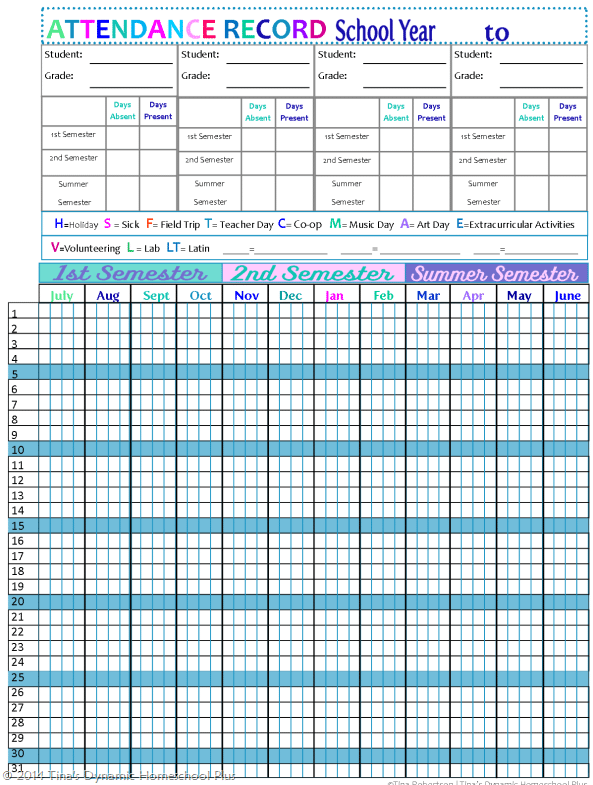
Blank Monthly Attendance Sheet Template

Monthly Attendance Calendar Sample

Monthly Attendance Record Template
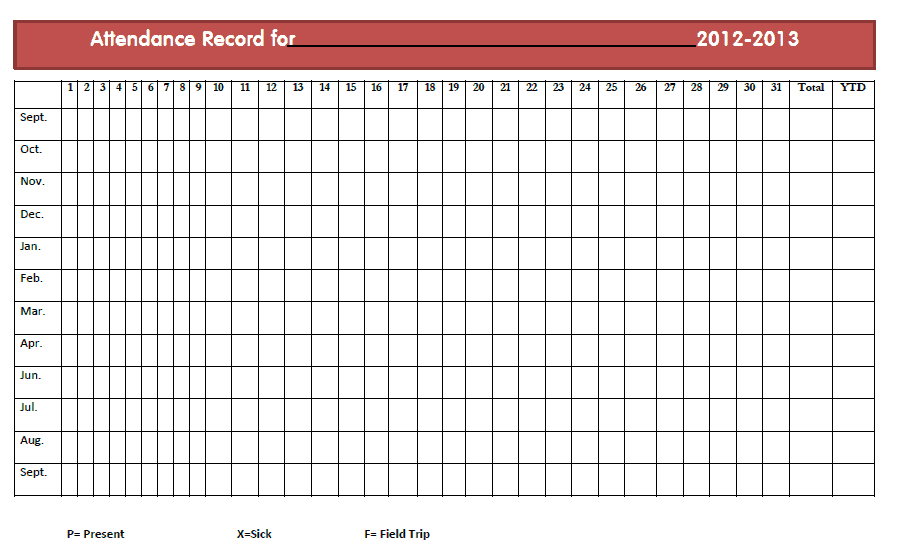
Monthly Employee Attendance Sheet

Monthly Attendance Record Sheet

Monthly Training Attendance Sheet

How to use the monthly attendance sheet
Step 1. Enter names or IDs and label all dates for the month. Compare shorter-period layouts in attendance sheet templates.
Step 2. Define codes for present, absent, approved leave, and non-working days. Record actual working hours using monthly timesheets.
Step 3. Update records consistently and check disputed entries before preparing summaries.
Define codes before people begin entering data. For example, approved leave, late arrival, and an unconfirmed absence should not share the same mark. Include a legend on the printed sheet so another administrator can interpret entries without asking the person who created it.
Check the denominator before calculating attendance percentages. Scheduled days may differ between people because of part-time arrangements or different start dates. A full calendar month does not mean every calendar day was a required attendance day.
Example and checks
If a student attends 18 of 20 required days, attendance is 90%. Exclude non-required days from the denominator according to your institution’s policy.
Keep sensitive reasons for absence in a separate restricted record. Pay and attendance decisions must follow the relevant policy rather than a generic template assumption. Coordinate approved leave with employee vacation trackers.
Choose the group and month being recorded
A monthly attendance sheet should identify the class, team, course, or other group and the exact month or period. Enter the correct dates and check the day labels after copying an earlier template. Months have different lengths, and a reused sheet can retain an extra date or the wrong weekend pattern. The period should be clear enough that a detached printed page can still be attributed correctly. Use an appropriate group or session reference where several records are maintained.
Decide whether the sheet records daily attendance, separate sessions, or another defined requirement. One mark per day may be insufficient where a person attends only part of a schedule or where morning and afternoon sessions are recorded independently. The layout should match the actual attendance process. Do not assume that every calendar day is a required day for every person. Work patterns, enrollment dates, and program arrangements can differ and need appropriate treatment.
Create a clear code key
Define the codes before entering records. Present, absent, approved leave, late arrival, non-working day, and unconfirmed status have different meanings. Use the categories relevant to the organization and make the legend visible on printed copies. Avoid several marks that look similar when handwritten. A code should be interpretable by someone other than the original recorder. If the process changes, explain the revised codes rather than silently giving an old symbol a new meaning.
Use a distinct status for information still being checked. An unclear entry should not automatically become an unauthorized absence or a confirmed presence. Follow the organization’s process for verification and correction. Keep the code key separate from sensitive reasons for absence. A general attendance grid may need the status without needing private health or family details. This keeps the main record readable while allowing supporting information to be handled through the appropriate restricted process.
Identify people consistently
Use names and identifiers that distinguish participants reliably. Two people can share a name, and a spelling change should not create an accidental duplicate record. Keep stable internal identifiers where appropriate and avoid exposing more information than the sheet’s audience needs. If the roster changes during the month, identify the relevant start or end point instead of making earlier dates appear to be missed attendance. The row should reflect the person’s actual participation requirement.
Check the roster before the period begins and review new entries carefully. A person temporarily attending another session may need a note or reference rather than a second independent record that later duplicates the total. Sorting a spreadsheet should include the entire table so dates and marks remain attached to the right person. A visually neat sheet is not reliable if names and attendance data have become misaligned during editing.
Record attendance through an agreed process
Assign responsibility for recording and verifying attendance. A self-sign-in process, a teacher’s register, and a supervisor’s confirmation provide different kinds of evidence. Use the method required for the setting and identify how late arrivals or departures are captured. An attendance record should represent the defined event, not an assumption based on a planned schedule. If entries are transferred from paper or another system, check the transcription before relying on the summary.
Enter information promptly and resolve unclear marks while the session is still recent. If a record is corrected, retain enough context to explain the change through the relevant process. Do not overwrite a disputed mark without appropriate review. The sheet can show a current supported status while keeping an understandable correction trail where needed. A reliable routine is more useful than trying to reconstruct an entire month from memory at the time a report is requested.
Calculate totals and percentages on the correct basis
Define the denominator before calculating an attendance percentage. A person attending 18 of 20 required days has 90% attendance under that simple example. Counting weekends, holidays, or days before enrollment as required days would distort the result if attendance was not expected then. Different people may have different required totals. The template should not force identical denominators merely because the same calendar dates appear across the top.
Treat partial sessions and other categories according to the relevant documented method. Do not invent a conversion for late arrivals or approved leave in a generic spreadsheet. Keep the calculation transparent and test a small example independently. Check formulas after adding people, dates, or codes. A summary may omit a new row or treat an unfamiliar code incorrectly. Clear definitions and tested calculations are necessary before totals are used in an official or management review.
Keep attendance distinct from hours and performance
Attendance shows participation under a defined recording process. It is not the same as actual hours worked, quality of work, effort, or learning progress. A person can be present without completing every task, and a timesheet may need more precise clock information than an attendance code provides. Use the appropriate records for those different questions. Avoid making broad judgments about a person’s character or performance from a single mark in a monthly grid.
Where attendance feeds another process, such as payroll or an institutional review, apply the relevant requirements and procedures. A generic template does not establish pay deductions, eligibility, or disciplinary outcomes. Make the connection between records explicit and allow discrepancies to be reviewed. This protects the usefulness of the attendance data: it remains a supported record of the defined event rather than becoming an unsupported answer to every question about the person.
Review, share, and retain the monthly record
At the end of the period, check missing marks, duplicate people, date errors, and unresolved status entries. Verify totals against the intended code rules and review unusual results before issuing a summary. Label the completed version and identify its review status. A printed report should show the group, month, and legend clearly. Keep the clean template separate from completed records so the old month is not lost when the next one begins.
Share only the information needed by the recipient and store sensitive supporting details appropriately. Follow the applicable retention and correction arrangements for the setting. Review the form when schedules, codes, or reporting requirements change. A useful monthly attendance template brings together a correct roster, a clear period, consistent codes, timely entry, appropriate calculations, and a dependable review process. Those practices make the record understandable long after the original session and reduce reliance on informal recollection.
A practical example of a changed monthly roster
Suppose a participant joins a course midway through a month. The attendance sheet should identify when their requirement began. Earlier dates should not automatically count as absences if attendance was not expected. A clear start reference and the relevant code treatment allow the monthly summary to represent the actual arrangement.
Now suppose one session’s attendance is still being checked. Use the defined unconfirmed status and assign the follow-up rather than converting it into a final mark for convenience. When the information is resolved, update the record through the agreed process and check any affected total.
If the monthly report is already issued, retain the relationship between the original and corrected versions where the process requires it. A corrected spreadsheet should not leave an unexplained contradictory paper summary in circulation.
The example shows why a correct roster, code key, denominator, and correction method matter together. Each supports a different part of the record. Accurate arithmetic cannot fix an inappropriate required-day total, and a clear code cannot establish a fact that has not been verified. A dependable attendance process checks both the events being recorded and the calculations used to summarize them.
For mixed work or study patterns, review required attendance separately for each applicable arrangement. A single copied formula may not suit everyone in the group. Keep the basis available so the person receiving the summary can understand why two participants have different required totals without assuming that one record is incomplete.
Frequently asked questions
Is attendance the same as hours worked?
No. Presence codes do not replace a timesheet showing worked hours and breaks.
Should weekends count as absences?
Only include days the person was actually required to attend.

You must be logged in to post a comment.