
A baseball score sheet template records a game’s batting order, innings, runs, and other scoring details. Choose a layout that gives you enough space to follow each team’s progress and summarize the game accurately.
For a team summary, look for separate spaces for innings and totals. If you want to record every plate appearance, choose a detailed scorecard with a box for each batter in each inning. Keep one clear record for each game.
Template previews and downloads
Excel Baseball Score Sheet
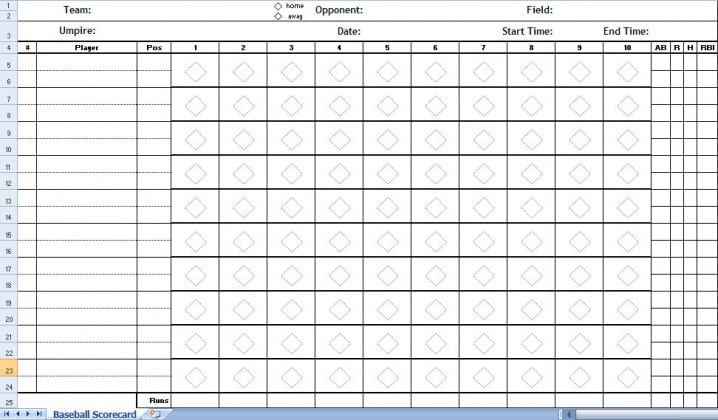

Colored Baseball Score Sheet
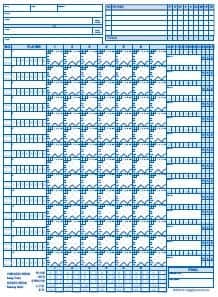
Baseball Score Sheet Sample
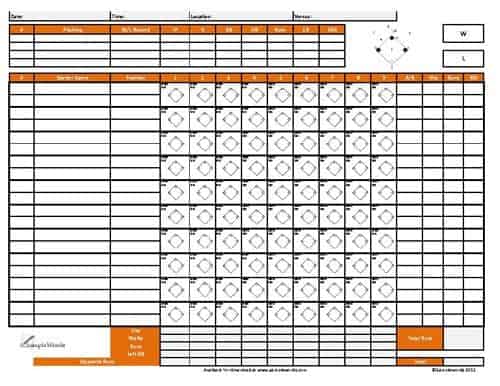
Baseball Score Card
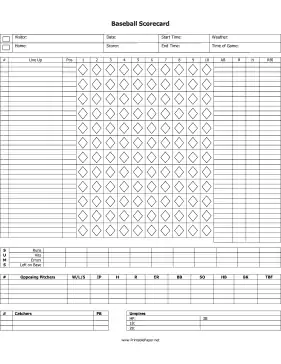
Baseball Scorecard Example
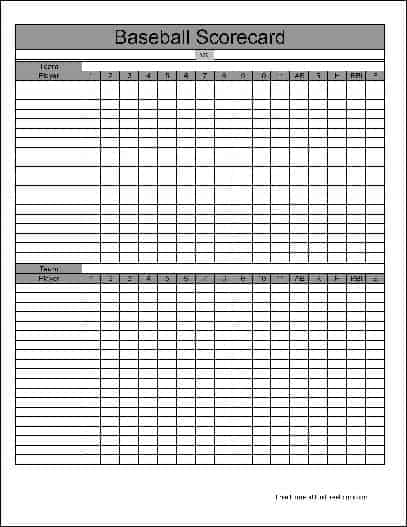
Baseball Score Sheet Blank Template
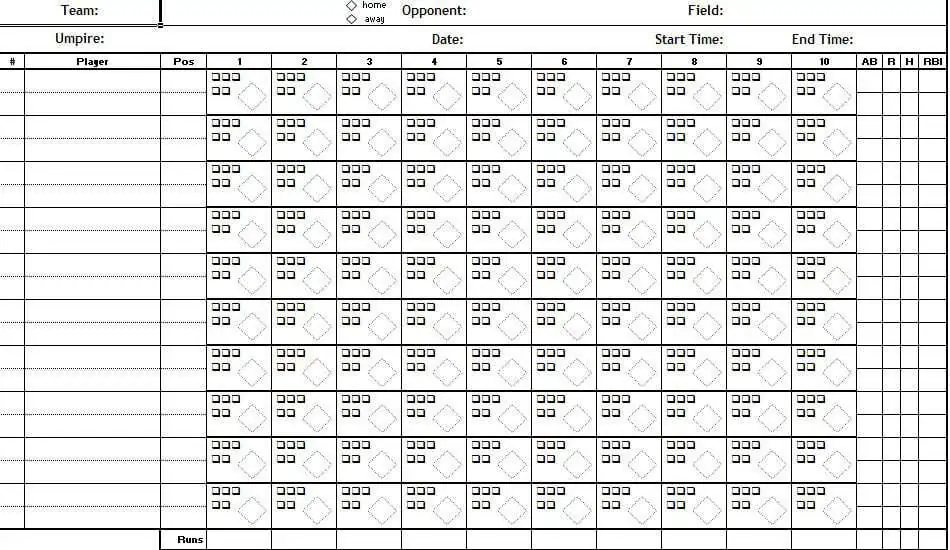
Baseball Score Sheet Microsoft
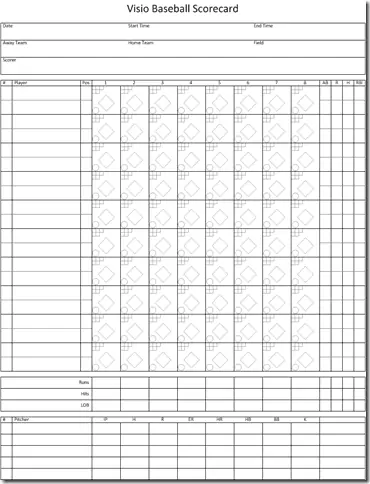
Baseball Score Sheet Downloadable
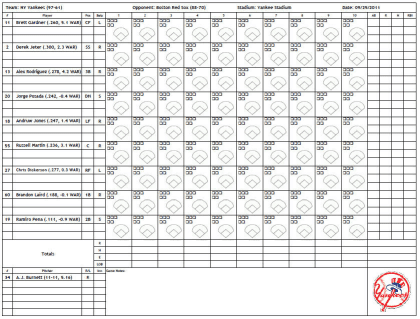
Baseball Score Record Sheet
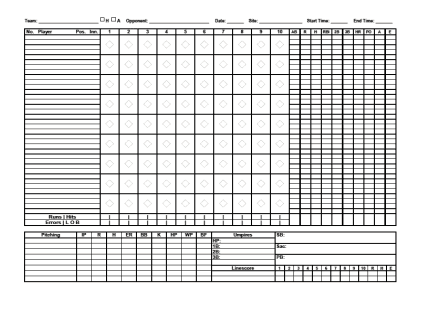
How to use the baseball score sheet template
Step 1. Write the date, venue, teams, and starting lineup before play begins. For individual plate appearances, compare the printable baseball scorecards.
Step 2. Record runs and relevant game events as they happen, keeping the home and visiting teams distinct. Keep player or volunteer arrival records separately with sign-in sheets.
Step 3. Reconcile inning totals with the final score and record substitutions so the summary remains understandable.
Before the game, decide whether the sheet will be a team summary or an official scoring record. A summary may need only inning totals, while an official record needs the league’s required detail and consistent scorer decisions. Put the date and both team names on every page so loose sheets remain identifiable.
Review each half-inning while the sequence is still fresh. When a correction changes an earlier run total, update the game total as well. Record postponed, abandoned, or shortened games clearly; unused innings should not look like innings played without runs.
Example and checks
If the visiting team scores two runs in the first inning and none in the second, enter 2 and 0 in the appropriate inning columns. A zero records a completed scoreless inning; a blank can mean the inning has not been played.
Do not confuse hits with runs or assume every runner reaching base has recorded a hit. Use a consistent scoring key and leave a note when you are unsure about a play. Use daily checklists for equipment and match-day preparation.
Choose the level of scoring detail you need
A baseball score sheet can serve several purposes. A team summary may show the lineup, runs by inning, and final totals. A more detailed record may track plate appearances and runner movement as well. Decide the purpose before choosing a template. A sheet used for a casual spectator’s notes does not need to be presented as an official league record. If the game requires an official scoring format, follow the relevant league’s instructions and make sure the selected layout provides the required fields.
Look at the available writing space, not only the number of columns. A compact sheet may be easy to carry but difficult to use if players’ names, substitutions, and notes become crowded. Check whether it covers one team or both teams and whether additional pages are needed. Keep the home and visiting teams clearly identified. A familiar-looking diamond or inning grid is not enough by itself; the scorer should be able to tell where the lineup belongs, how totals will be recorded, and where corrections can be made.
Prepare the score sheet before the first pitch
Enter the game date, location, team names, and any game identifier used by the organization. Add the starting batting order and identify the team associated with each lineup. Check names or player identifiers with the available lineup information rather than relying on memory. If several pages will be used, label each page consistently. This is especially helpful at a tournament where several games are being recorded on the same day and loose sheets can otherwise be confused.
Prepare a simple notation key and keep the necessary writing materials available. The key should match the level of detail you intend to record. For a summary sheet, you may mainly need clear inning and total fields. For a detailed record, establish how you will show outs, hits, walks, substitutions, and runner progress. Leave room for a note when a play needs clarification. A consistent method that can be understood later is more useful than a collection of symbols that change halfway through the game.
Record runs inning by inning
Use the appropriate row or section for each team and enter runs in the correct inning column. A zero can show a completed half-inning in which no runs were scored, while a blank may indicate that the period has not been completed or was not played. Keep those meanings distinct. Confirm a half-inning’s run total before moving to the next one. If you also keep a running game total, update it from the same checked figures rather than maintaining two independent versions that can drift apart.
Suppose a team scores one run in the first inning, none in the second, and three in the third. Its total after those innings is four. If an earlier entry is corrected, review the cumulative total as well. This simple cross-check is useful even when the sheet contains detailed player information. Do not confuse a hit count with a run count. A team can have different totals for hits and runs, and those columns should be labeled clearly enough that a later reader does not mistake one for the other.
Keep the lineup and substitutions understandable
A batting-order record should remain readable when a substitute enters. Keep the original order and identify the replacement in the relevant slot, using the notation required by the scoring context. Record enough timing information to understand when the change took place. Do not overwrite one player’s name so completely that earlier entries can no longer be attributed. The score sheet needs to preserve the history of the game, not just the players present at the final moment.
Use player names or identifiers consistently across pages. Shirt numbers can help identify a player, while defensive position numbers used in scoring have a different purpose. If both appear, label them so they are not confused. A team summary may not require every defensive change, but any information needed for the intended record should have a clear place. When uncertain about an official scoring decision, follow the applicable process or add a note for clarification rather than inventing a result solely to fill an empty box.
Review the game record while events are still recent
At a natural break, check whether inning entries, lineup notes, and any summary totals agree. Resolving an unclear entry soon after a play is generally easier than reconstructing the entire game later. Keep a concise note about a disputed or corrected item. The note should identify what needs review without making the rest of the sheet unreadable. If a second person is helping, agree who maintains the main record so corrections are not made independently in conflicting copies.
After the game, reconcile the runs by inning with the recorded final score. Review any totals required by the chosen format and make sure they have been calculated from the relevant entries. Do not fill unused innings with zeros if doing so would imply that they were played. If the game was shortened, suspended, or otherwise ended under special circumstances, describe its status according to the relevant instructions. A clear status note is more useful than a complete-looking grid that gives a misleading impression of what occurred.
Print and organize sheets for repeated use
Before printing a large batch, test one page at the intended size. Check that inning labels, player rows, and total boxes remain readable. A spreadsheet may print differently after column widths, margins, or scaling are changed. Make sure a single team’s key information is not split across pages without clear continuation labels. If the template is used on a clipboard, leave enough margin for the clip and enough writing space for practical use during the game.
Retain a blank master and use separate files or printed sheets for completed games. Name digital copies with a consistent date and game identifier so records can be found later. A photograph or scan can provide a reference copy where appropriate, but check that all entries and page edges are visible. Store records according to the team’s or organization’s arrangements. The aim is a reliable record that can be interpreted later, not merely a neat page at the end of the afternoon.
A practical example for a small team
Imagine a team volunteer needs to record a game primarily for the coach’s summary. The volunteer chooses a layout with a batting order, inning columns, and final totals. Before play, the volunteer confirms the team names and starting lineup. During the game, runs are entered by inning, with substitution notes kept beside the affected batting slot. A brief review at the end of each half-inning helps catch a misplaced number before it is carried into later totals.
If the coach later needs a full account of individual plate appearances, that requirement should lead to a more detailed scorecard rather than trying to reconstruct missing information from the summary. Choosing the right level of detail at the beginning prevents that problem. The score sheet and detailed scorecard can support different needs, and either can be useful when its purpose is clear. Consistent identification, timely entries, readable corrections, and a checked final total form the foundation of a dependable baseball game record.
Frequently asked questions
Is a score sheet the same as a detailed scorecard?
The terms sometimes overlap. A summary sheet emphasizes inning totals, while a detailed scorecard records individual plate appearances.
Can I use the sheet for a shortened game?
Yes. Label the actual innings played and leave unused innings clearly marked rather than inventing scores.

You must be logged in to post a comment.