
A homework schedule template allocates study time to assignments and revision. It helps students plan realistic work sessions around fixed classes and other commitments.
Choose a daily or weekly layout with subject, task, due date, estimated duration, and status. Distinguish a study session from the assignment it supports.
Template previews and downloads
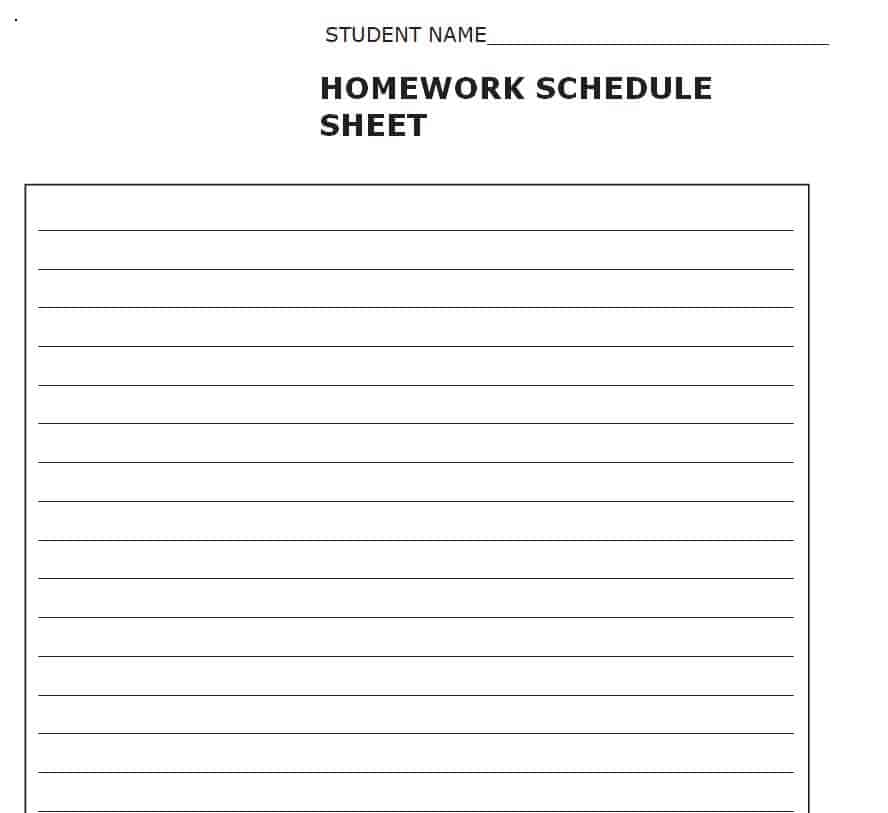
Basic Homework Schedule Sheet Template
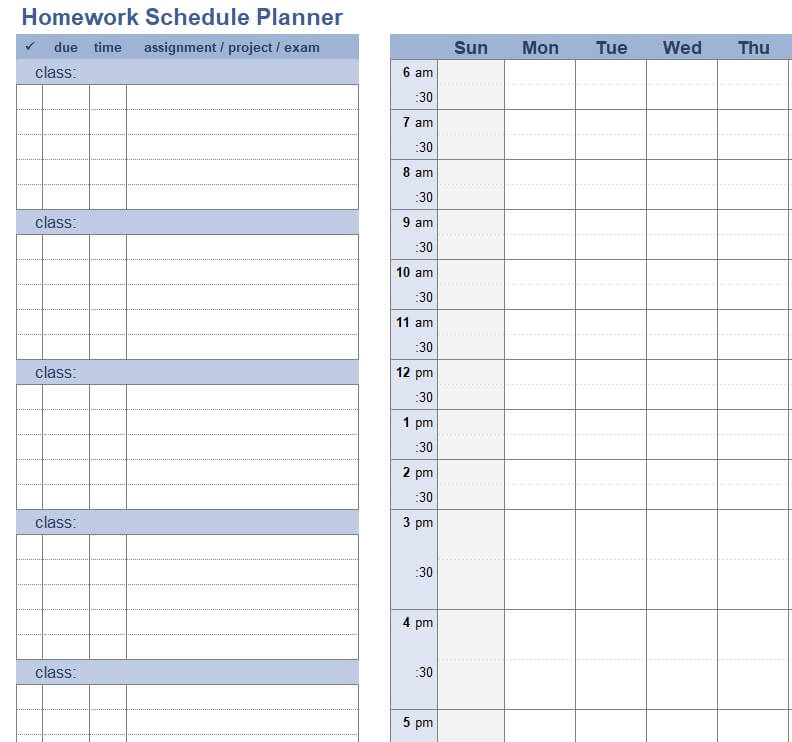
Homework Schedule Planner Excel Template
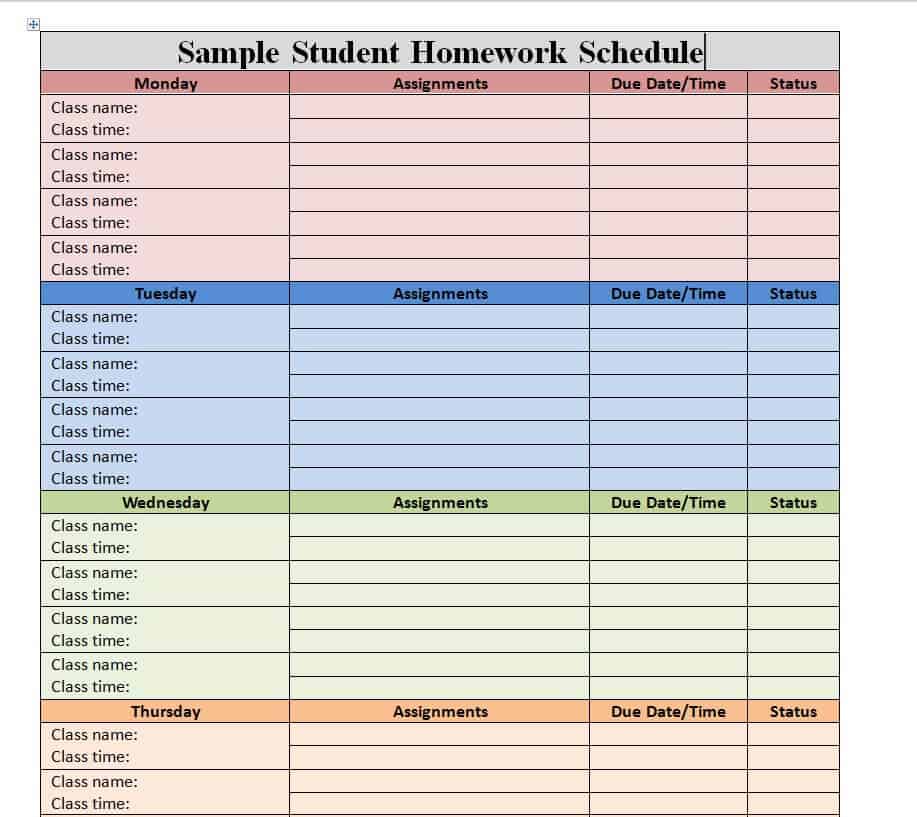
Sample Student Homework Schedule Template
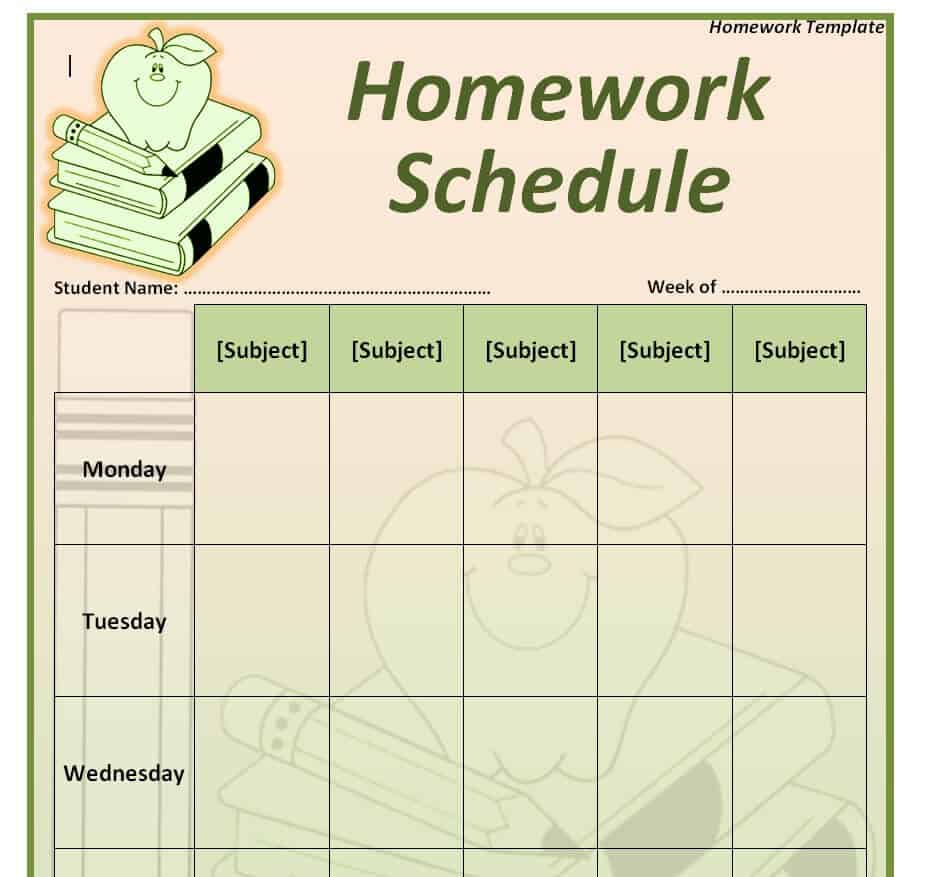
Free Printable Homework Schedule Template
Online Weekly Homework Schedule Template

Sample Daily Homework Schedule Template
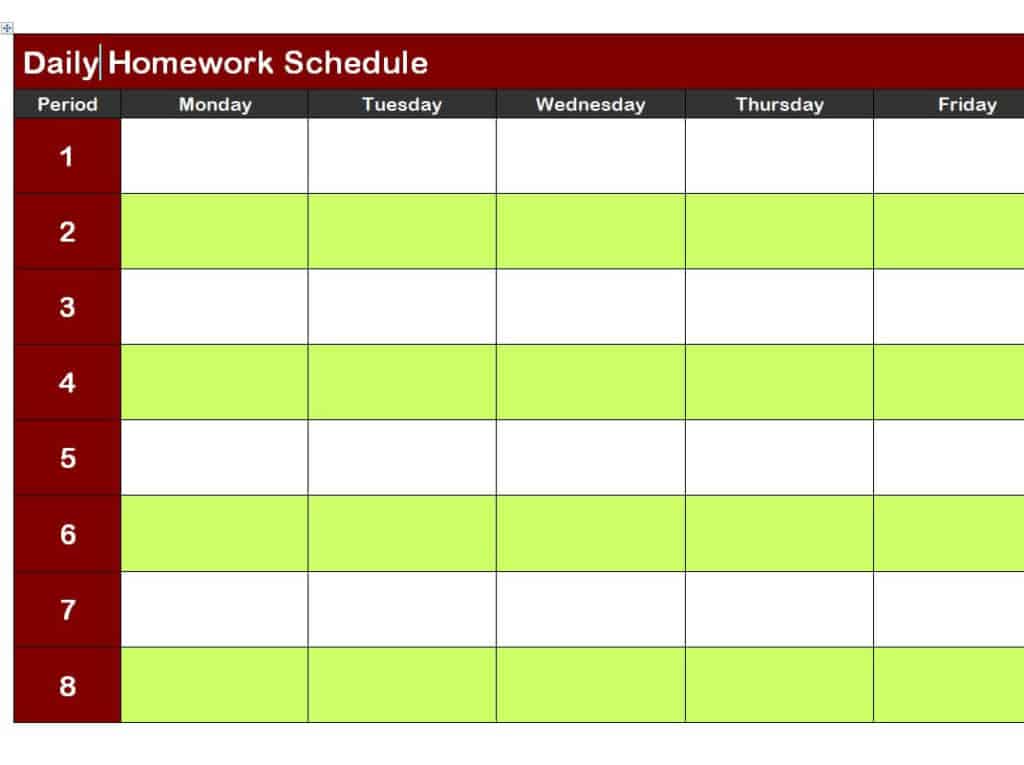
Weekly Homework Planner Template in XLSX Format
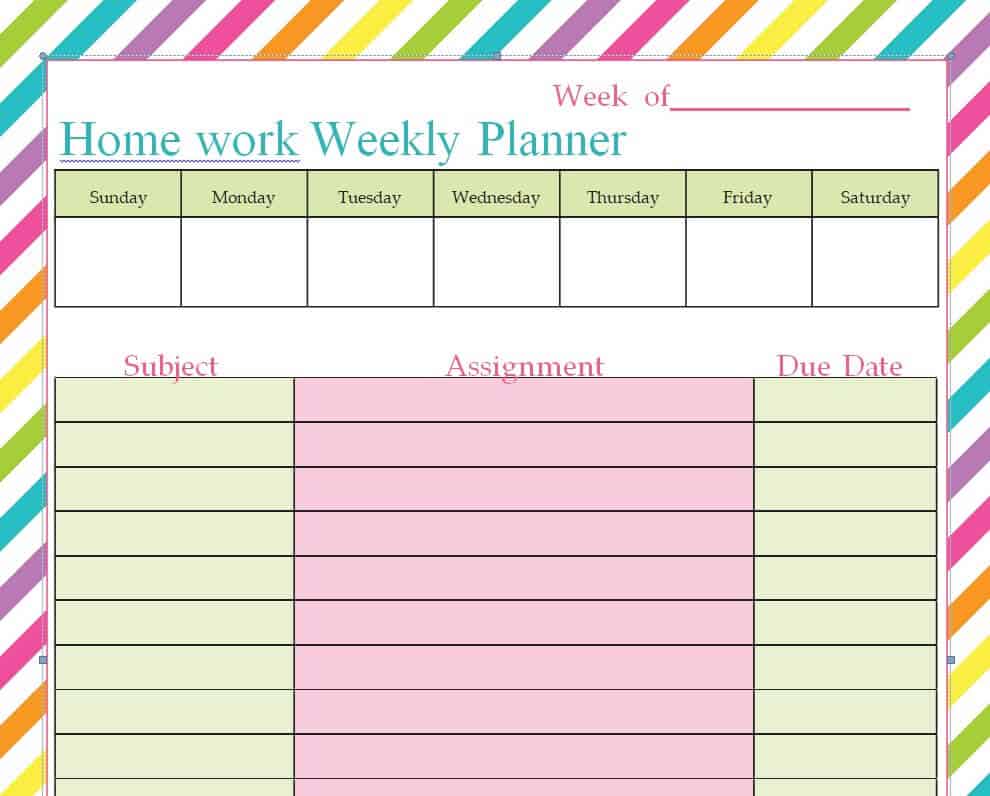
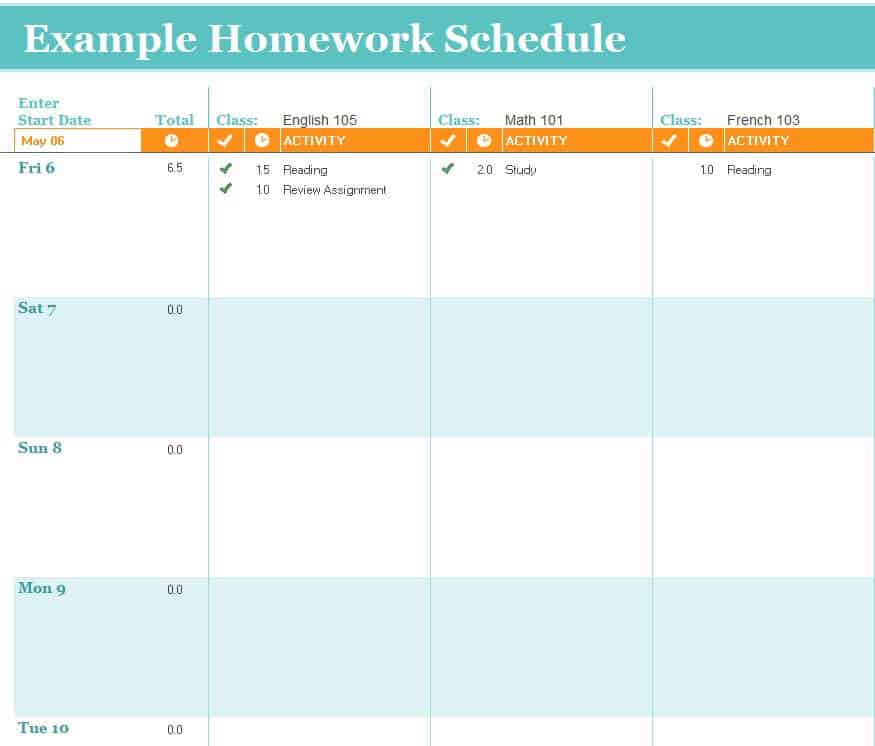
Example Homework Schedule Template
Editable Personal Homework Schedule Template
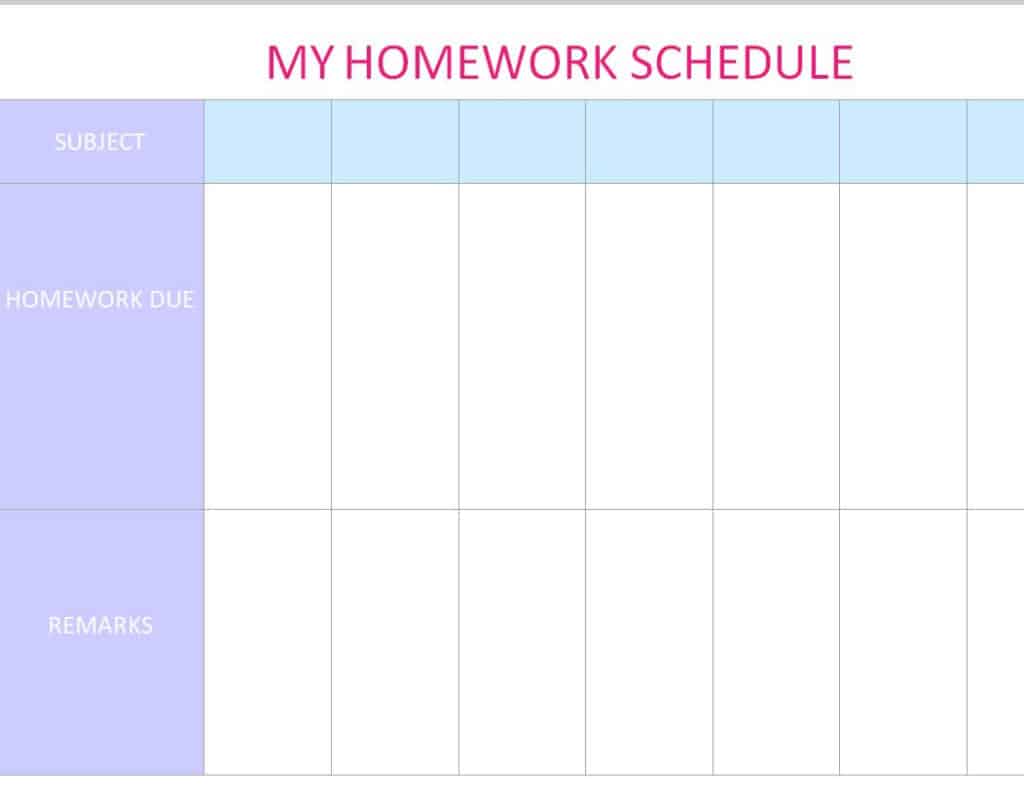
Practical Homework Schedule Planner Template in DOC Format
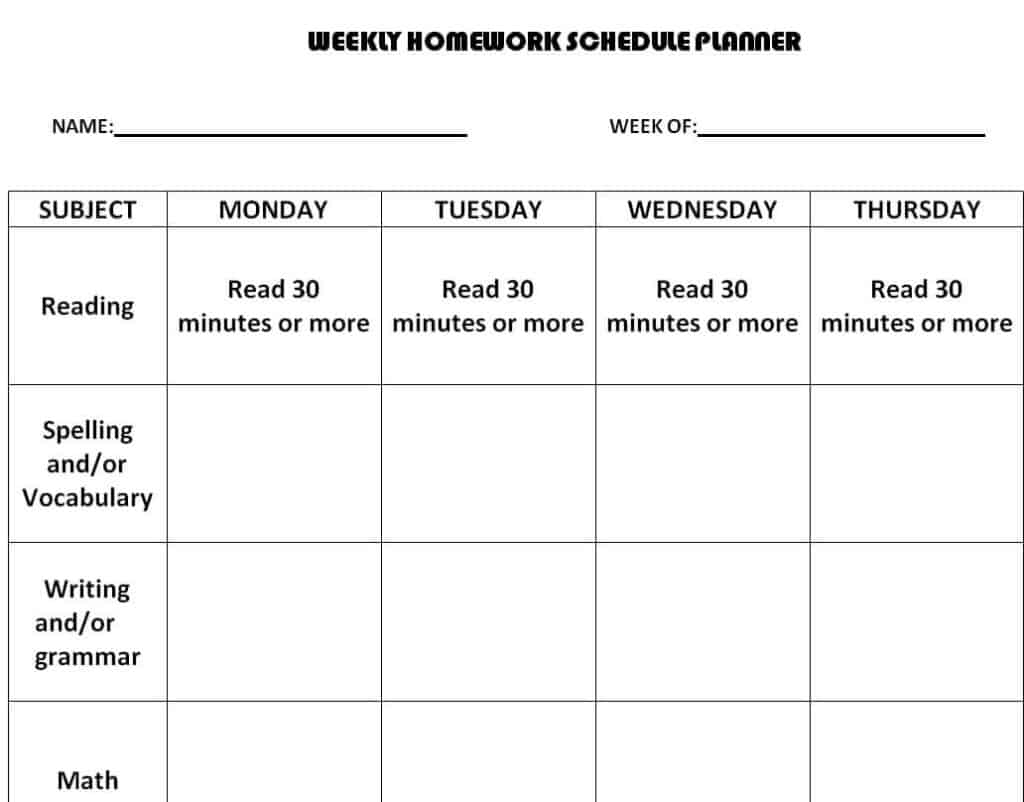
Simple Homework Schedule Template
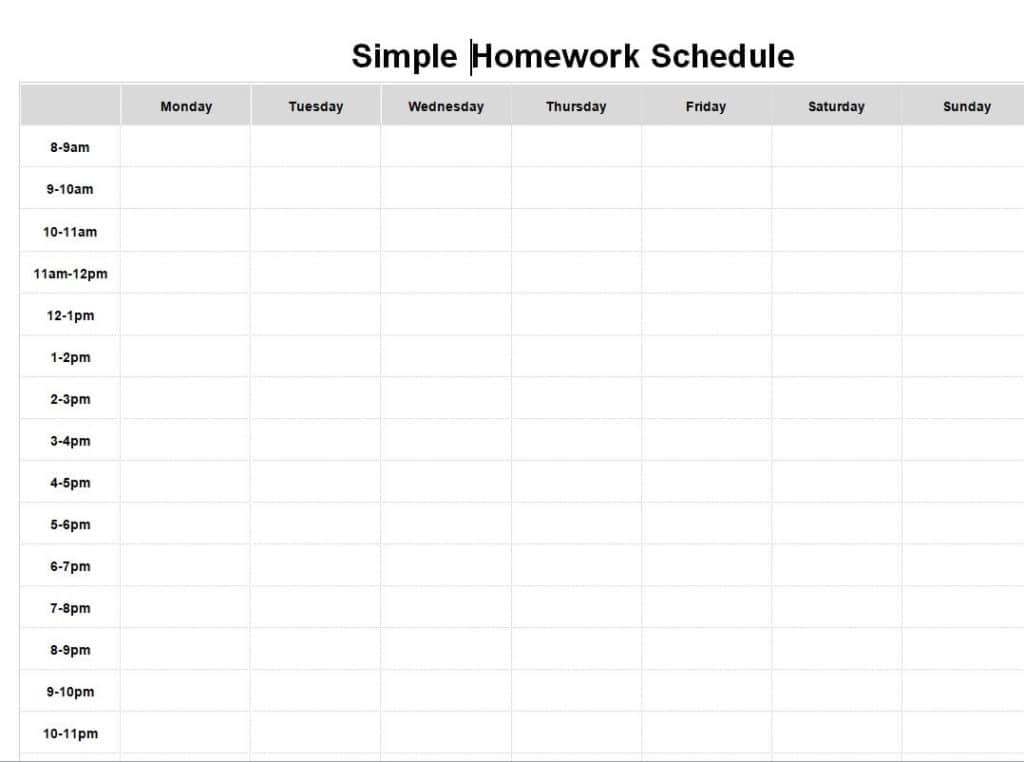
Official Weekly Homework Schedule Template
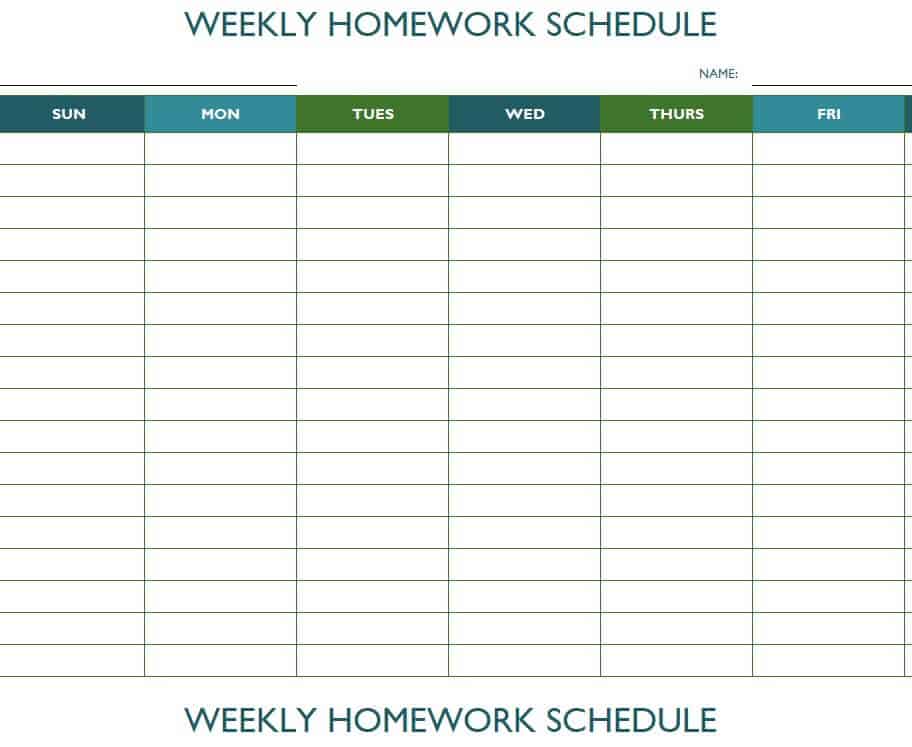
How to use the homework schedule template
Step 1. List assignments and their actual deadlines. Track due dates over a longer period with homework calendars.
Step 2. Break larger tasks into manageable steps and estimate the time needed. Reserve fixed lessons in class schedules.
Step 3. Schedule those steps before the deadline and review progress after each session.
Estimate the work rather than scheduling only the submission date. A longer assignment can be divided into research, planning, drafting, checking, and submission. These stages make it easier to see whether progress is realistic before the final evening arrives.
Review the plan after a study session. If a task repeatedly takes longer than estimated, change future allocations instead of blaming the student or copying an unrealistic schedule. Keep instructions clear enough for the student to use independently where possible.
Example and checks
An essay due Friday might need research on Monday, an outline on Tuesday, drafting on Wednesday, and review on Thursday.
Avoid filling every available hour. Breaks and unexpected tasks need room in the plan. Keep smaller study actions in to-do lists.
Turn assignment instructions into a workable task list
A homework schedule should begin with the work that has actually been assigned. Collect the instructions, deadline, subject, and any requirements for submission. Then identify the actions needed to produce the result. A worksheet may need one session, while an essay may require reading, planning, drafting, checking, and submission. Write those actions clearly enough that the student knows what to start. A timetable full of entries such as ‘study’ can look organized while leaving the hardest decision unresolved.
Keep the assignment list and the study schedule connected. The assignment list records what is due; the schedule allocates time to move that work forward. You do not need to copy the entire assignment brief into every time block. Use a short task name and a reference to the instructions. If a requirement is unclear, make finding clarification an early action. Waiting until the planned drafting session to discover missing instructions can waste the time that was reserved for the work.
Estimate effort before filling time slots
Estimate the work in manageable units rather than assigning the same amount of time to every subject automatically. Reading a short passage, preparing an outline, revising vocabulary, and solving a set of problems can require different levels of concentration. The estimate does not need to be perfect. It needs to be useful enough to show whether the proposed work can fit. Review past sessions to improve estimates, and distinguish the time spent actively working from breaks and other activities.
Leave room for uncertainty, especially when the task is unfamiliar. A student may need to revisit an example, find a source, or ask for help. Treating the first estimate as a rigid promise can create an unrealistic schedule. If a task takes longer, record what remains and decide how to adjust later sessions. Do not simply extend every evening indefinitely. The purpose of estimation is to make choices early about timing, task size, and the help or information needed.
Build study sessions around real commitments
Enter fixed classes, travel, activities, meals, and other relevant commitments before reserving homework periods. Identify times when the student can realistically concentrate and the materials or equipment are available. A computer-based assignment cannot be planned reliably for a period when the only available device is in use by someone else. Similarly, a session that starts immediately before a necessary departure may be too short for the intended task. The schedule should reflect the student’s actual day.
Plan breaks and some flexible time rather than filling every opening. The suitable length of a study session varies by student and task, so the template should allow adjustment. Choose a clear action for each session and avoid switching among many unrelated assignments without a reason. A longer project can be divided across several days. This allows progress to be reviewed and reduces the pressure created when all of the required work is placed immediately before the submission deadline.
Match revision methods to the task
Revision sessions should describe what the student will do, not only the subject name. Examples include answering practice questions, explaining a concept without looking at notes, checking corrections from an earlier exercise, or reviewing material identified as uncertain. These are planning examples rather than a guarantee of a particular result. The useful feature is that the activity has a recognizable purpose. After the session, the student can say what was completed and what still needs attention.
Keep preparation for a test separate from completing homework assigned for the next lesson. Both may be important, but they can compete for the same time. Use the deadline calendar to see upcoming assessments and begin preparation early enough to avoid displacing every other subject at the last moment. When a topic remains difficult, schedule a specific follow-up such as reviewing an example or asking the teacher a question. Repeating a vague block called ‘revise more’ may not address the actual difficulty.
Review progress without copying unfinished work blindly
After a study session, update the status in a way that reflects what happened. A task might be complete, partly complete, waiting for clarification, or ready for checking. If work is partly complete, name the remaining action. ‘Finish questions six to ten’ is more useful than copying the original full assignment into tomorrow’s list. This allows the next session to start promptly and helps the student see progress instead of facing the same undifferentiated obligation each day.
During a weekly review, look at deadlines, remaining effort, and the time available. Move tasks deliberately rather than automatically carrying every unfinished item forward. A session repeatedly postponed may be too large, badly timed, or missing a clear next step. A parent or teacher can help identify that issue without completing the work for the student. The schedule should support growing independence: the student learns to notice commitments, make realistic allocations, ask for clarification, and revise a plan when circumstances change.
Use the template in paper or editable form
A printed homework schedule can work well when it is easy to keep nearby and update. Leave enough writing space for specific actions and short progress notes. An editable file may suit frequent changes, but use one current master to avoid conflicting copies. Check print scaling if the layout has been changed. Tiny text, narrow rows, and a page split halfway through a day can make an otherwise useful plan difficult to use.
Save a clean copy for future weeks and keep completed plans only when the history is useful. Avoid including private account details or passwords in a sheet that may be seen by classmates or visitors. At the end of a review period, adjust fields that are not serving the student. A complicated planner is not inherently better than a simple one. Clear task descriptions, sensible timing, visible deadlines, and a consistent review habit are the features that make a homework schedule practical.
A worked example for a week with competing deadlines
Suppose a student has a mathematics exercise due Wednesday, a language essay due Friday, and a science test early the following week. The first step is to identify the effort behind each commitment. The exercise may need one focused session, the essay may need an outline and draft before checking, and the test may need several short revision sessions. Entering only the three subject names would hide those differences.
The student can reserve an early session for the mathematics exercise, a separate session for the essay outline, and later sessions for drafting and review. Science revision can begin before the weekend rather than waiting until the other deadlines have passed. The exact arrangement depends on real availability, so the plan should also show existing activities and necessary rest.
If the essay draft takes longer than expected, the review should identify what remains. Perhaps only the introduction needs revision, or perhaps a source still needs checking. That specific remaining action is easier to schedule than repeating ‘essay’ as a full task. The student then checks which later session can absorb the work without silently dropping another commitment.
At the end of the week, compare the planned and completed work to improve future estimates. The useful lesson may be that drafting needs more time or that a particular evening is not dependable for concentrated study. The purpose of the example is a realistic sequence of decisions, not a rule that every student should follow the same timetable.
Make checking and submission visible
Reserve time to check the result against the assignment instructions. Confirm that all required questions, sections, references, or attachments are present. A session marked complete because the main writing is finished can still leave essential work undone. The checking step should be specific enough that the student knows what to review.
Submission may also need its own action. Printing, signing, uploading, or bringing a document to class are different requirements. Confirm the relevant deadline and method, then mark the assignment submitted only when that action is complete. Keeping this distinction visible helps prevent finished work from remaining in a folder while the actual submission is missed.
Frequently asked questions
What if a task takes longer than expected?
Update the estimate and adjust future sessions before the deadline becomes urgent.
Is a schedule the same as a homework calendar?
A schedule assigns work time; a calendar emphasizes due dates and upcoming events.

You must be logged in to post a comment.