
A facility maintenance checklist organizes inspections and follow-up for a building and its systems. It should record observations and actions rather than only a row of ticks.
Choose sections for the systems actually present, such as lighting, plumbing, access, and equipment. Identify which tasks need a qualified contractor.
Template previews and downloads
Building Maintenance Checklist




Examples of Checklists:
Maintenance Checklist Sample

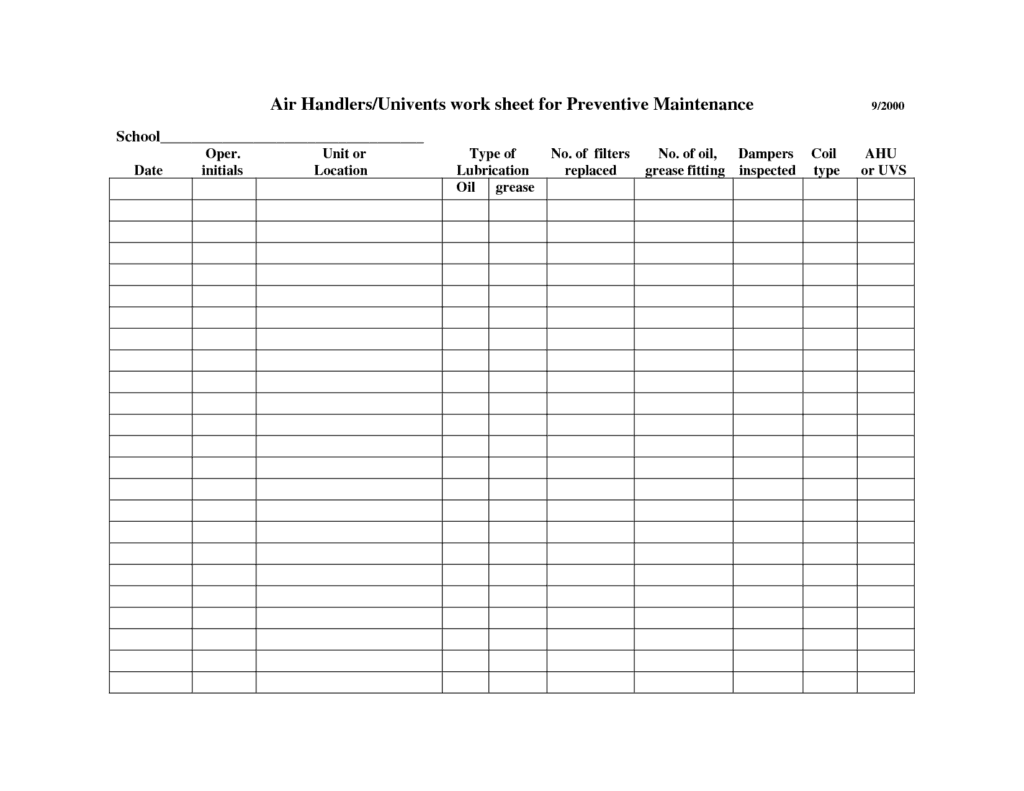
Preventive Maintenance Checklist
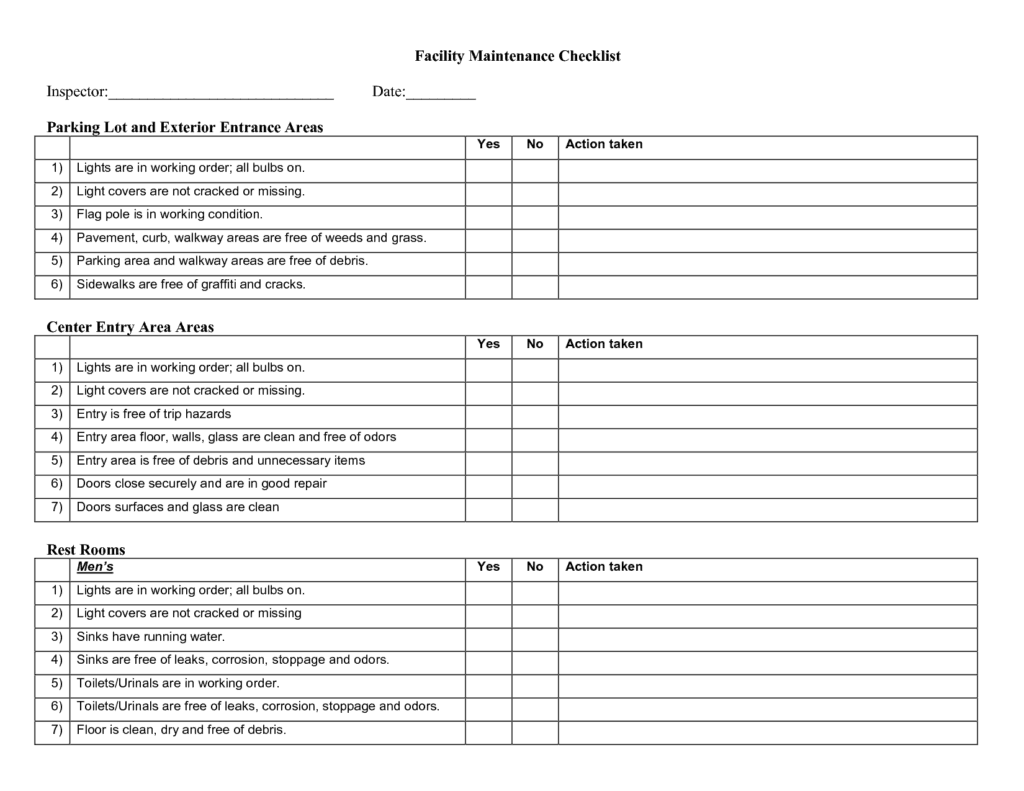
Facility Maintenance Checklist
Maintenance Checklist Sample

Home Maintenance Checklist

Maintenance Checklist Example

How to use the facility maintenance checklist
Step 1. List assets or areas and define inspection frequency from applicable guidance. Keep completed repair histories in service logs.
Step 2. Record findings, dates, and the person responsible for each check. Record repair expenditure using expense trackers.
Step 3. Assign corrective actions and verify completion before closing them.
Write inspection items around observable conditions. ‘Check lighting’ can be made more useful by identifying the area, what was observed, and whether follow-up is needed. Include a not-applicable option where systems differ between buildings so blank fields are not misread as missed inspections.
Separate finding, action, and closure. A defect may be discovered by one person, assigned to a contractor, and verified by another. Recording those stages gives a clearer history than a single completion checkbox and helps prevent an unresolved defect from disappearing between reviews.
Example and checks
A leaking pipe should produce an action with a location, responsible person, and target date. Marking the inspection complete does not mean the leak is repaired.
A generic checklist cannot certify building safety or replace required inspections. Use relevant standards, manufacturer instructions, and qualified advice for technical work. Separate routine opening checks into daily checklists.
Define the facility and the inspection scope
A facility maintenance checklist should identify the building or site and the areas covered by the review. A small office, a workshop, and a larger public building do not have identical systems or maintenance requirements. Begin with an inventory of relevant areas and assets. Use the template to organize the checks that actually apply, rather than treating every printed item as universally suitable. The scope should explain what is being reviewed and what is outside the checklist.
Distinguish a routine observation from a technical inspection or certification. Staff may be able to report a visible leak or damaged fitting, while other work requires an appropriately qualified person. The checklist should reflect that distinction and refer to the relevant procedures, manufacturer guidance, and applicable requirements. A completed generic form does not establish that a building is safe or compliant. Its useful role is to make responsibilities, observations, follow-up, and supporting records easier to manage.
Write checks around observable conditions
Each item should be clear enough that different reviewers understand what they are being asked to observe. A vague instruction such as check equipment can produce inconsistent results. Identify the area or asset and the relevant observation within the person’s authorized role. Provide a place for a description when something needs attention. A tick without context may show that an activity was attempted but tell the maintenance team little about a defect that was found.
Use statuses that distinguish satisfactory, issue found, not checked, and not applicable where those meanings are needed. An empty box can otherwise represent several different situations. Avoid treating not applicable as a way to hide a missed check. Record the reason when it matters to the review. Keep technical acceptance criteria in the appropriate controlled guidance rather than inventing thresholds in a general-purpose template. The checklist should help staff follow the relevant process consistently and report exceptions clearly.
Assign frequencies and responsibilities appropriately
Choose review frequencies from the relevant asset guidance, use, risks, and requirements. Not every item needs a daily check, and some checks cannot be deferred simply because a convenient monthly template is available. Record the basis for important scheduled activities and identify the responsible person or role. A task labeled maintenance team may need a named owner in the working process. Someone should know who will arrange the work and who will confirm its completion.
Keep routine opening checks, planned servicing, and specialist inspections distinguishable. They may share an asset but require different records and competencies. A daily observation should not overwrite the due date of a formal inspection. Similarly, a contractor visit does not automatically mean every outstanding item on the general checklist has been resolved. Use references between records where useful, while preserving each one’s purpose. This gives managers a clearer picture of what has been observed, what has been done, and what remains required.
Record defects with useful location information
A defect entry should allow the responsible person to find the affected area without repeating the entire inspection. Include a location or asset identifier, the observation date, a concise description, and an appropriate reference. A photograph can support the report where the organization’s process permits it, but the written record should still identify the issue. Avoid including unnecessary images of people or sensitive areas in broadly shared copies. The aim is a useful maintenance report, not an uncontrolled collection of photographs.
Describe what was observed rather than asserting an unsupported technical cause. A staff member can report water near a fitting without diagnosing the internal fault. Record any immediate action taken under the site’s procedure and escalate urgent matters through the relevant process. Do not rely on the spreadsheet alone to communicate something requiring prompt attention. The checklist can preserve the record, while established communication and safety arrangements determine how the situation is handled in real time.
Track corrective actions through closure
An inspection and a repair are separate events. When an issue is found, assign an action owner, target date, and status. Keep the item open until the required work and verification have been completed through the appropriate process. Marking the inspection done should not make the defect disappear. If the action is transferred to a contractor, record the work reference and the person responsible for following it up. A name in a cell is not enough if nobody has accepted the task.
Define what closure means for the action. It may require a work report, a follow-up observation, or verification by a qualified person, depending on the issue. Keep evidence and unresolved limitations identifiable. If a temporary measure is used, do not label it as a permanent repair unless that is the supported outcome. Review overdue actions and repeated issues deliberately. A checklist is most valuable when it drives follow-up, rather than accumulating a series of completed inspection dates beside the same unresolved problem.
Use the checklist during a practical review
Suppose a routine walk-through identifies a damaged light fitting in a named corridor. The record identifies the location, observation, reporter, and time. The issue is communicated through the site’s procedure and assigned for appropriate assessment or work. The checklist does not need an improvised technical diagnosis. It needs enough accurate information for the responsible person to act and enough status information for the issue to remain visible until the required follow-up is complete.
At the next review, the manager checks the associated work record rather than assuming that a contractor’s visit resolved the item. If further work is needed, the action remains open with a clear next step. If the issue recurs, the history can support an appropriate technical review. This example shows why observation, assignment, completed work, and verification benefit from distinct fields. The template can connect those stages without pretending they are one interchangeable checkmark.
Maintain an inspection history that can be reviewed
Keep dated records and supporting references so patterns can be identified. Repeated defects in one area may indicate a need for a broader review, but the checklist cannot establish the cause on its own. Use the history to provide evidence to the relevant people. Keep completed records separate from the clean master, and document changes to the checklist when assets or responsibilities change. An obsolete item should not remain indefinitely merely because it was present in the original template.
Before sharing a summary, identify open priorities and the actions needed, not just the number of checks completed. Review formulas, filters, and dates if the workbook includes a dashboard. A misleading summary can hide overdue work even when the detailed entries are correct. Restrict access to sensitive facility information as appropriate. A dependable maintenance checklist combines a defined scope, clear observations, suitable responsibilities, traceable actions, and meaningful closure. The form supports that process; it does not replace professional inspection, technical judgment, or applicable requirements.
Use an open-action review to prevent repeated findings
Suppose a monthly checklist contains the same unresolved defect for three consecutive reviews. Recording another inspection date does not move the repair forward. Check whether an action owner was assigned, whether the work was authorized, and what evidence is needed to close the item. The useful next step may be an escalation or a clarified work request through the site’s procedure.
Review the record for the reason the action remains open. A contractor awaiting access, a missing approval, and an incomplete repair require different responses. Keep that reason visible rather than repeatedly marking the item pending without explanation. The checklist can support coordination by identifying the obstacle and the person responsible for the next decision.
Once the action is resolved, record the relevant verification and retain the history. If the issue returns, the earlier entries can help an appropriate reviewer understand the pattern. This is more useful than deleting old findings to make the current checklist look clear. A dependable review process values an accurate picture of open work over a high count of completed forms.
Frequently asked questions
Should every item be checked daily?
No. Frequency depends on the asset, risk, use, and applicable requirements.
How should urgent defects be handled?
Follow the site’s escalation procedure and record immediate controls and follow-up.

You must be logged in to post a comment.