
A weight loss challenge spreadsheet records participant measurements and agreed scoring rules. It should support fair, private recordkeeping without encouraging rapid or unsafe weight loss.
Choose a layout with participant IDs, measurement dates, units, and a clearly defined calculation. Agree participation and sharing rules before collecting data.
Template previews and downloads
Weight Loss Tracker Excel


Weight Loss Spreadsheet

Weight Loss Challenge Spreadsheet Sample

Weekly Weight Loss Sheet
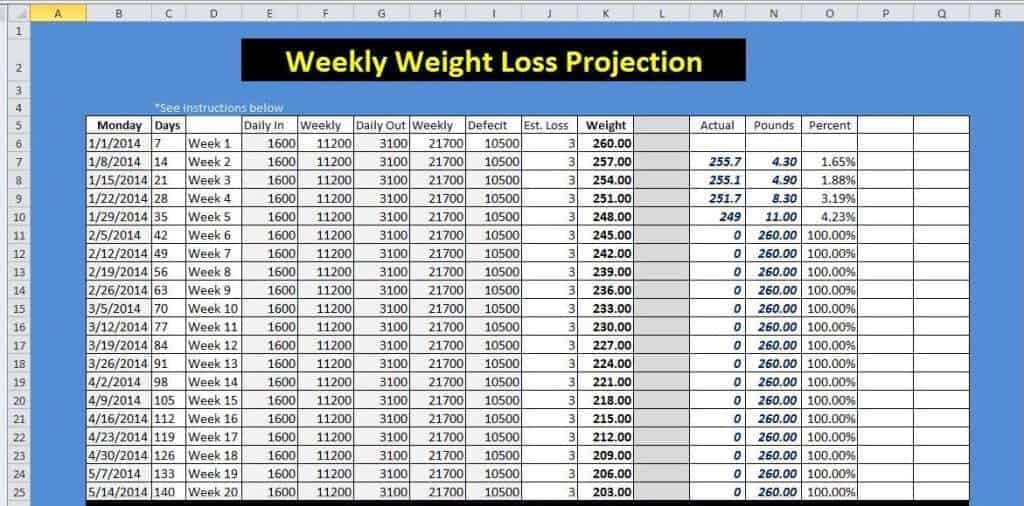
Weight Loss Tracker

Weight Loss Tracking Sheet

Excel Weight Loss Spreadsheet

Weight Loss Chart Printable

How to use the weight loss challenge spreadsheet
Step 1. Define consistent measurement conditions and an appropriate review interval. For private individual records, use weight trackers.
Step 2. Enter measurements using the same units and correct dates. Track activity consistency with fitness calendars.
Step 3. Review the calculation and keep individual results visible only to authorized people.
Agree the scoring method before the challenge starts. Percentage change and absolute weight change produce different rankings, and neither provides a complete measure of health. Keep participant consent and the handling of results clear, especially if a group leaderboard is proposed.
Avoid building rewards around extreme short-term changes. Measurement timing, clothing, and fluid fluctuations can affect readings. A sensible record should document consistent conditions and allow participants to opt out of sharing personal measurements rather than making disclosure a condition of support.
Example and checks
A change from 100 to 98 kilograms is a 2% reduction from the starting weight. Comparing kilograms lost alone favors participants with higher starting weights.
A spreadsheet cannot judge health, body composition, or whether a target is suitable. Avoid extreme deadlines and do not present contest scores as medical outcomes. Record sessions using workout logs.
Define a supportive purpose before choosing a scoring system
A weight loss challenge spreadsheet should support an agreed, voluntary activity rather than turn a health measurement into pressure to achieve an extreme result. Begin by deciding what the group is trying to organize. Participants may want a private progress record, shared accountability, or recognition for consistent habits. Those purposes do not require the same fields or scoring. The organizer should make participation, data sharing, and withdrawal arrangements clear before collecting measurements. A workbook is a recordkeeping tool, not an assessment of whether weight loss is appropriate for a particular person.
Consider whether weight needs to be the main competitive measure at all. A group can record chosen actions or participation without ranking bodies or medical outcomes. If weight is included, avoid presenting the largest short-term change as proof of the best health result. Individual circumstances differ, and the spreadsheet cannot evaluate them. The design should not encourage participants to manipulate a measurement, hide a concern, or pursue an unsuitable target for points. A supportive process allows people to seek appropriate professional guidance and to choose whether the activity suits them.
Agree what information will be recorded
Use a small, clearly defined set of fields. A private weight record may need a participant identifier, measurement date, unit, starting value, and current value. A group administration view may need only participation status or a summary the person has agreed to share. Avoid collecting detailed medical information simply because the workbook has space. Separate the record needed for administration from information that belongs with the participant or an appropriate health professional. The organizer should know why each field is present and who is allowed to see it.
Use participant IDs or agreed display names when that reduces unnecessary exposure. Keep the link between an ID and a person’s identity in an appropriately restricted place if it is needed. A shared leaderboard does not need to contain phone numbers, addresses, or private notes. Ask participants how their information may be used and explain the intended audience. Someone joining a supportive group should not have to discover later that their measurements have been copied into a public post or sent to people outside the agreed activity.
Keep measurement records consistent
Label the unit and use it consistently throughout the relevant calculation. Kilograms and pounds must not be combined without an explicit conversion. Record the actual measurement date rather than assuming every row represents exactly one week. Conditions can affect readings, so an optional brief note may help explain a difference. Keep the notes relevant and private. The purpose is a more interpretable record, not an attempt to diagnose the cause of every change or require participants to justify their bodies to the group.
Do not replace a genuine recorded value simply because it makes the trend less tidy. If an entry was typed incorrectly, correct it with an understandable note or change history where appropriate. If a measurement is missed, mark it as missing rather than entering zero or copying the last value as if it were a new reading. These choices matter to charts and calculations. A line drawn through invented values can look precise while misrepresenting what was actually observed.
Understand percentage change and absolute change
Absolute change subtracts the current value from the starting value when the report is showing weight lost as a positive amount. Percentage change then divides that difference by the starting value and multiplies by one hundred. For an illustrative starting value of 100 kilograms and a current value of 98 kilograms, the absolute reduction is 2 kilograms and the percentage reduction is 2%. State the sign convention clearly so an increase is not accidentally displayed as a positive loss. Keep the raw measurements available beside the calculated result.
Different calculations answer different questions. Comparing kilograms lost can favor someone with a higher starting weight, while percentage change still does not establish what is medically suitable or healthiest for each person. A ranking is a rule chosen for an activity, not a clinical conclusion. Do not describe it as a complete measure of progress. If formulas are added to a template, test a decrease, an increase, an unchanged value, and a blank entry. A missing or zero starting value should trigger review rather than a misleading percentage.
Use charts and summaries without overstating them
A chart can make recorded measurements easier to review over time, but its axes and dates need to be clear. Check whether entries with uneven date gaps are displayed appropriately. Keep the underlying table available so the plotted values can be checked. Avoid changing the scale simply to make a modest movement look dramatic. The visual should help the participant understand the record, not create a stronger impression than the data supports.
Short-term weight changes can have several influences and are not a direct measurement of changes in body fat. A spreadsheet cannot identify the cause from a number alone. Keep interpretation cautious and avoid labeling every rise as failure or every drop as success. If the activity also tracks habits chosen by participants, display those measures separately with clear definitions. A count of completed walks, for example, is a record of that action and should not be converted automatically into a promised weight or health outcome.
Manage access, corrections, and the end of the activity
Decide who maintains the master workbook and how participants submit or correct records. Multiple editable copies can produce conflicting measurements and accidental disclosure. A controlled process should let a participant identify an error without exposing someone else’s private record. If summaries are shared, check that they contain only the agreed fields and participants. Hidden worksheets, comments, and old versions can also contain information that was not intended for wider circulation.
Plan what happens when the challenge ends or someone withdraws. Follow the applicable privacy requirements and the arrangements communicated to participants for retaining, returning, or deleting information. Do not keep sharing a person’s measurements simply because they appeared in an earlier version. Retain only what has an appropriate purpose, and make the final summary understandable about what was measured. An organizer’s convenience should not be the only reason for keeping a permanent detailed health-related record.
Review the activity for fairness and usefulness
Before starting, test the workbook with fictional participants. Check units, formulas, dates, blanks, and access to the shared view. Ask whether the scoring method creates incentives that conflict with a supportive purpose. Review how someone with no weight change, a missed measurement, or a decision to stop participating will be treated. These ordinary cases should be handled clearly rather than improvised after results are visible. A spreadsheet that works only for an idealized steady decline is not ready for real records.
At the end, ask whether the activity helped participants maintain a useful routine and whether the information handling matched what was promised. A challenge does not need an elaborate leaderboard to be worthwhile. The downloadable templates can organize chosen records, but they should remain subordinate to voluntary participation, appropriate privacy, honest calculations, and individual suitability. The most useful outcome is a clear and respectful record that participants understand, rather than a numerical ranking presented as a judgment of health, effort, or personal value.
Separate participation recognition from measurement results
A group can recognize a participant’s engagement without making body-weight change the only measure of contribution. If chosen actions or attendance are recorded, define what each entry means and let the participant understand the process. Keep those records separate from medical claims and from private measurements the person has not agreed to share.
For example, a participant may attend agreed check-ins while choosing not to appear on a weight leaderboard. The administration sheet should be able to represent that arrangement accurately. It should not label the person unsuccessful simply because a particular measurement is absent from the shared view.
Review any recognition scheme for unintended pressure before the activity begins. Clear participation choices and respectful handling of missing or withdrawn information make the spreadsheet more practical for a real group. The aim is an organized voluntary activity whose records are understandable, rather than a system that rewards whichever short-term number looks most dramatic.
Frequently asked questions
Should everyone have the same target?
No. Individual suitability varies; participation should not require an identical weight-loss target.
Can I use anonymous participant names?
Yes. IDs or nicknames can limit exposure, provided the organizer can manage records appropriately.

You must be logged in to post a comment.